

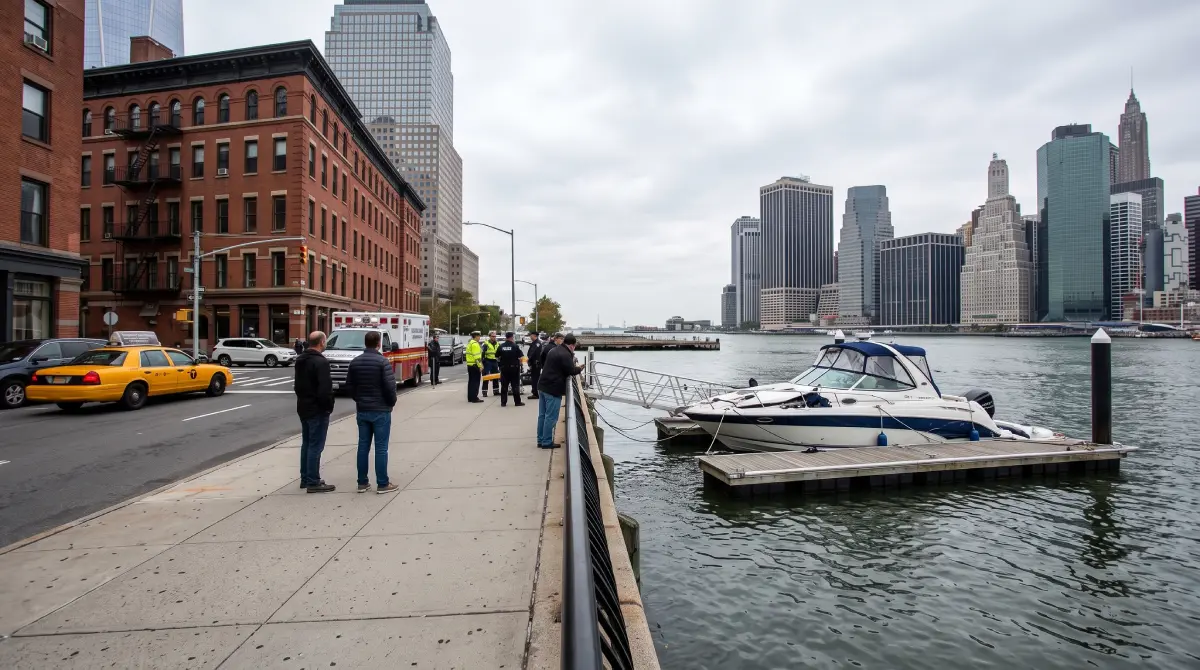
Manhattan is an island, wrapped by the Hudson River, the East River, and New York Harbor, and thousands of people cross that water every day on ferries, tour boats, and private craft. When one of those trips ends in injury, a Manhattan boat accident lawyer works from a different rulebook than the one covering an ordinary car crash. Boat claims often fall under federal maritime law instead of New York’s no-fault system, the deadlines run on separate clocks, and the party who owes you money may be a ferry operator, a charter company, or the boat’s manufacturer rather than one driver’s auto insurer. Those differences decide whether you recover anything, and they start mattering the day it happens. Call Silver Law Group at 212-470-4544 for a free consultation.
Types of Boat Accidents on Manhattan’s Waterways
The waterways around Manhattan carry more passenger traffic than almost anywhere in the country, and the injuries reflect the mix of boats sharing them. A commuter ferry striking a piling injures dozens at once; a jet ski clipping a swimmer near the harbor injures one person severely. Common cases on these waters include:
- Ferry crashes. NYC Ferry, NY Waterway, and the Staten Island Ferry running out of Whitehall Terminal move large crowds at speed, and a hard docking or a collision throws standing passengers into railings and stairs.
- Recreational and jet ski collisions. Personal watercraft turn quickly and stop poorly, and a rider who misjudges a wake or current can hit another vessel or a person in the water.
- Propeller strikes. A spinning propeller can amputate a limb in seconds, usually when a swimmer, a fallen passenger, or a diver ends up behind or beside a boat still in gear.
- Capsizings. The East River is a tidal strait, not a calm river, and its currents can swamp or flip a small boat that a less demanding waterway would carry safely.
- Dock and gangway falls. Boarding and stepping off is where many injuries happen; a slick gangway or an unguarded edge at Pier 11 sends people down onto concrete or into the gap between boat and dock.
The vessel type shapes the claim. A public ferry brings a government notice deadline; a private charter brings its own insurer and its own contract; a jet ski owned by an individual may carry thin coverage or none. Identifying who operated and owned the boat is the first thing that has to happen.
Cruise, Charter, and Yacht Passenger Injuries
When you buy a ticket on a sightseeing cruise or hire a charter, the operator takes on a heightened duty of care under maritime law. A common carrier that boards paying passengers owes them more than a private boat owner owes a friend; it has to actively look for and fix hazards its passengers cannot see or avoid. That standard is why a wet, unmarked deck or a missing handrail on a stairway is not just bad luck but a breach the operator can be held to. Circle Line runs its sightseeing boats out of Pier 83 on the Hudson, and the same duty applies to the smaller tour operators, chartered yachts, and fishing charters that load passengers along Manhattan’s piers. On these boats the deck is almost always wet, the vessel is moving, and passengers are walking to a rail for a photo or moving between levels. An operator who lets spray pool on a walkway, leaves a gangway without a secure handrail, or fails to warn about a step in low light has created exactly the hazard the heightened duty is meant to prevent. Fishing charters add their own risks: bait and fish slime on the deck, gear underfoot, and passengers handling hooks and heavy tackle in open water. If the crew put you in that position without proper footing, warnings, or equipment, the charter can be liable for what happened to you.
What Causes Boat Accidents and Who Is Liable
Most boat accidents come down to operator negligence: excessive speed for the conditions, failure to keep a proper lookout, ignoring right-of-way rules, or overloading the vessel. On crowded harbor water where ferries, tour boats, and small craft share the same lanes, a single inattentive operator puts everyone around them at risk. Alcohol is a recurring cause. New York applies the same 0.08 blood alcohol limit to boat operators that it applies to drivers, and a drunk operator who injures you can face both criminal charges and civil liability for your losses. A conviction is not required for your claim; the same conduct that breaks the law also proves negligence in your case. Brianna’s Law raised the bar for who is even allowed to operate. Since January 1, 2025, every operator of a motorized vessel in New York must hold a boating safety certificate, regardless of age. An operator running a boat without one was breaking the law the moment the accident happened, and that failure supports your claim. Liability rarely stops with the person at the wheel. Depending on the accident, the responsible parties can include:
- The operator who was steering the boat.
- The owner who let an untrained or impaired operator use it.
- The ferry or charter company that employed the crew and controlled the vessel.
- The City, where a public ferry or a poorly maintained dock is involved.
- The manufacturer, if a steering, throttle, or fuel defect caused the crash.
Sorting out which of these applies determines who pays, and more than one can be on the hook for the same accident.
Federal Maritime Law vs. New York State Law
Whether your case is governed by federal or state law depends on where the accident happened. Injuries on navigable waters — the Hudson, the East River, New York Harbor, the waters a boat can travel between states or out to sea — generally fall under federal admiralty jurisdiction. Cases brought under maritime law are heard in the U.S. District Court for the Southern District of New York, at 500 Pearl Street. Admiralty law carries its own rules on liability, damages, and time limits, and they often differ from what a New York car-accident victim would expect. Not every boat injury is federal. Some claims, particularly those involving state-registered recreational boats or accidents tied to a dock or shoreline, proceed under New York law in state court. In Manhattan, those cases are filed in New York County Supreme Court at 60 Centre Street. Which forum applies changes the deadline, the procedure, and sometimes the amount you can recover, so the choice is not a formality. One point traps many people: New York’s no-fault insurance system does not cover boats. After a car crash, no-fault pays your early medical bills and lost wages no matter who caused it. There is no equivalent for a boat accident. Your medical costs are not automatically covered while your case is pending, which makes proving fault and pursuing the responsible party far more important from the start. You do not get a fallback payment simply for being hurt on the water. Because the same accident can sometimes be framed under either body of law, the analysis of where and how to file is one of the first decisions in your case.
Injured Crew and the Jones Act
If you work on the water rather than ride as a passenger, a different law protects you. The Jones Act lets a seaman sue their employer for negligence when an unsafe workplace causes injury, a right ordinary land-based workers’ compensation does not give. Ferry crews, tugboat hands, and NYPD Harbor Unit officers who spend their shifts aboard a vessel can qualify as seamen under this law. The Jones Act comes with two other protections. Maintenance and cure requires your employer to pay your daily living expenses and medical care while you recover, regardless of who caused the injury, until you reach maximum medical improvement. Separately, the unseaworthiness doctrine holds the vessel’s owner responsible when the boat itself, its equipment, or an undermanned crew was not reasonably fit for its work, and that unfitness injured you. These claims are worth pursuing because they often pay more than a standard workplace injury claim and reach both the employer and the vessel owner. If your job put you on a boat when you were hurt, your case is likely a Jones Act case, not an ordinary workers’ comp file.
Injuries and Compensation You Can Recover
Water injuries tend to be severe because the setting works against you: help is slower to arrive, the water itself is a hazard, and a boat’s machinery is unforgiving. The cases we see most often involve:
- Brain injury from near-drowning. Even a short time without oxygen underwater can cause permanent cognitive damage that shows up in the days after rescue.
- Propeller amputations. A propeller strike can sever fingers, a hand, or a leg, leaving permanent disability and a long reconstruction.
- Hypothermia. The rivers and harbor stay cold much of the year, and a person in the water loses body heat fast, which can be life-threatening on its own or alongside other injuries.
- Spinal cord trauma. A hard fall on deck, a violent collision, or a dive into shallow water can fracture the spine and cause paralysis.
What you can recover falls into two categories. Economic damages cover the measurable costs: medical treatment, future care, lost income, and reduced earning capacity. Non-economic damages cover the harm that has no receipt, such as pain, disability, disfigurement, and the loss of things you used to do. When a boat accident kills someone, New York’s wrongful death statute, EPTL 5-4.1, lets the family pursue a claim, and it must be filed within two years of the death. That case can recover the financial support the family lost and the medical and funeral costs the death caused. It is a separate deadline from the personal-injury clocks, and missing it ends the family’s claim no matter how strong the case is.
What to Do After a Boat Accident on the Water
What you do in the first hours after a boat accident shapes what your case is worth later. Take these steps as soon as you safely can:
- Report the accident. Tell the vessel’s crew or operator immediately, and make sure it reaches the U.S. Coast Guard Sector New York, which handles serious injuries, deaths, and significant damage on these waters.
- Get medical care the same day. Go to a trauma center such as Bellevue Hospital even if you feel able to wait; internal injuries, hypothermia, and delayed drowning symptoms can surface hours later, and the medical record you create now ties your injuries to the accident.
- Photograph everything. Capture the vessel, the deck condition, any missing handrail or wet surface, your injuries, and the surrounding water and dock before anything is cleaned up or repaired.
- Get names. Collect the names and contact information of the crew, the operator, and any passenger who saw what happened.
Then be careful who you talk to. The boat’s owner or their insurer may call within days, friendly and eager for your account. Do not give a recorded statement or sign anything before you speak with a lawyer. Adjusters use those early recorded answers, given while you are hurt and rattled, to argue later that the accident was partly your fault or that your injuries are minor. You are not required to give one, and it is usually a mistake to.
Deadlines to File Your Boat Accident Claim
A boat accident claim can run on several clocks at once, and the shortest one controls. Miss it and the longer deadlines stop mattering. Under federal maritime law, 46 U.S.C. 30106 gives you three years from the date of injury to file most claims on navigable waters. New York’s own limit for personal injury, CPLR 214, is also three years. Those two look similar, but which one applies affects the court, the procedure, and occasionally the outcome, so the overlap does not make the choice automatic. Government cases move much faster. If your injury involves a public ferry or a city-owned dock, General Municipal Law 50-e requires a formal Notice of Claim within 90 days of the accident, long before any lawsuit is filed. This is not the lawsuit itself; it is a strict early warning to the government entity, and courts routinely throw out claims that skip it. Ninety days passes quickly while you are recovering, which is why a public-ferry injury needs a lawyer early. Cruise and some charter tickets carry the tightest deadline of all. Federal law lets these operators put a one-year time limit and a notice requirement in the fine print of your ticket, and that contractual deadline overrides the standard three-year window. Many injured passengers never read it and lose the right to sue before they realize a shorter clock was running. Because these deadlines overlap and the shortest one wins, the safe move is to have your case reviewed quickly. A lawyer can tell you which clock applies to your accident and file before any of them run out.
Why Injured Boaters Choose Silver Law Group
You should not have to pay a lawyer out of pocket while you are hurt and out of work. Silver Law Group takes boat accident cases on a contingency fee, which means you pay no attorney’s fee unless we recover money for you. The fee is a set percentage of the recovery, taken only from what we win; if the case recovers nothing, you owe no attorney’s fee. That arrangement lets you fight a ferry line or a charter company’s insurer without money deciding whether you can afford to. Every case starts with a free consultation, and we hold that conversation in English, Spanish, or Russian. We answer the phone 24 hours a day, because boat accidents do not wait for business hours. If your injuries keep you from coming to our Midtown office, an attorney will come to your home or your hospital room instead. Our office is at 49 West 37th Street in Manhattan. Call 212-470-4544 to talk with a boat accident lawyer about what happened to you.