

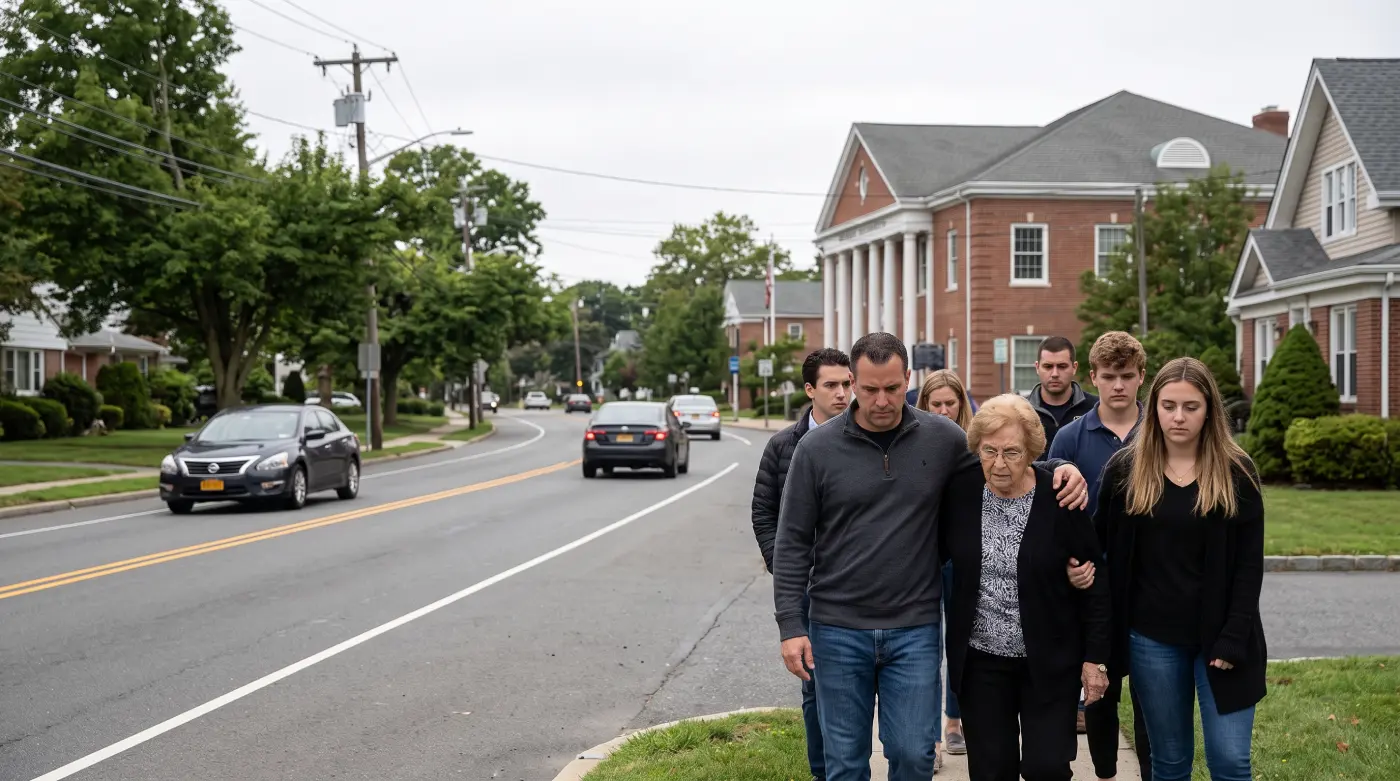
Silver Law Group represents Suffolk County families in the first weeks after a death caused by someone else’s negligence. A Suffolk County wrongful death lawyer at our firm handles the paperwork, the court filings, and the insurer’s calls while you tend to your family. Every case starts with a free consultation, available any hour of the day or night, in English, Spanish, or Russian. If leaving the house is more than you can manage right now, the attorney will come to your home or the hospital instead of asking a grieving family to travel to our Midtown Manhattan office. There is no fee to talk, and no obligation once you have.
Do You Have a Wrongful Death Case in Suffolk County
Some of Suffolk County’s deadliest crashes happen on the roads you drive every week: Route 25, Sunrise Highway, and the Long Island Expressway. A fatal wreck on any of them can be the start of a wrongful death claim, which the law recognizes when a preventable death is caused by another party’s negligence or wrongdoing. The core question is not how badly your family is hurting. It is whether someone who owed your loved one a duty of care broke it, and whether that breach is what killed them.
Traffic is only one source. Construction falls take lives across Suffolk’s job sites, where a missing guardrail or an unsecured ladder turns a workday into a fatality, and New York’s Labor Law gives the family a claim separate from workers’ compensation. Medical errors kill too: a missed diagnosis, a surgical mistake, a medication given to the wrong patient. When a hospital or doctor’s care falls below the accepted standard and a patient dies because of it, that death can support both a wrongful death claim and a medical malpractice claim.
Not every tragedy is a legal case. A death with no negligence behind it, a true accident no one could have stopped, usually is not actionable, however painful. What makes a case is fault: a driver who ran the light on Sunrise Highway, a contractor who skipped the safety rail, a physician who ignored the test result. If another party’s choice caused the death, you likely have a claim, and the first step is letting a lawyer review what happened.
Who Can Legally File the Claim
You cannot file a wrongful death suit in your own name, even if the person who died was your husband, your wife, or your child. New York gives that right to one person: the personal representative of the decedent’s estate, meaning the executor named in a will or an administrator the Surrogate’s Court appoints when there is no will. In Suffolk County, that appointment happens at the Surrogate’s Court on Center Drive in Riverhead, and it usually has to happen before the lawsuit can move.
That single-filer rule confuses families, because the person who files is often not the person grieving hardest. The representative sues on behalf of the people the law calls distributees: the surviving spouse, the children, and, when there is no spouse or child, the parents. They are the ones who actually recover, in shares set by their relationship to the person who died and their financial dependence on them.
If no one has opened the estate yet, that is the first practical task. A lawyer can petition the Surrogate’s Court to appoint a representative, often the surviving spouse or an adult child, so the case has someone with legal standing to bring it. Until that happens, the claim exists but no one can enforce it, and the clock on the deadline keeps running.
What a New York Wrongful Death Claim Can Recover
New York does not pay a family for their grief. It pays for what the law calls pecuniary loss, the measurable financial value the death took from the survivors. EPTL §5-4.3 sets out what counts, and a wrongful death case is built around proving these categories:
- Lost income and support — the wages and benefits your loved one would have earned over a working life, minus what they would have spent on themselves.
- Funeral and burial expenses.
- The value of household services the decedent performed, from childcare and cooking to home repairs and driving, that the family now pays for or goes without.
- Lost parental guidance for children, meaning the instruction and upbringing a parent would have provided as the child grew.
Each of these has to be proven, not assumed. That usually means the decedent’s tax returns and pay records, testimony about their role at home, and sometimes an economist who projects the lifetime figures. The clearer the proof of what the family lost in concrete terms, the stronger the wrongful death case.
Why New York Denies Grief and Companionship Damages
You may have read on other firms’ websites that you can be compensated for your grief, your loss of companionship, or your emotional suffering. In New York, that is not true, and a lawyer who implies otherwise is setting you up for disappointment. The state remains one of the last that ties wrongful death recovery strictly to economic loss.
Reform has come close and failed four times. The Grieving Families Act, which would have let families recover for grief and loss of companionship, passed the Legislature repeatedly, and Governor Hochul vetoed it a fourth time on December 5, 2025. Until a version becomes law, the rule stands: a Suffolk County wrongful death claim can recover the financial value the death cost the family, but not the emotional pain of the loss itself.
That limit makes the economic proof do double duty. Because the law will not pay for how much you loved the person, everything turns on documenting what they provided in dollars and hours.
Conscious Pain and Suffering Is a Separate Survival Claim
There is one path to recovery for suffering, and it belongs to the person who died, not to the survivors. If your loved one was conscious and in pain between the injury and death, whether for minutes on the LIE shoulder or weeks in a hospital bed, the estate can bring a survival action under EPTL §11-3.2. This claim recovers the decedent’s own conscious pain and suffering, plus the earnings they lost in that final period.
It is filed alongside the wrongful death claim, by the same personal representative, but it answers a different question. The wrongful death case asks what the family lost. The survival claim asks what the person endured. Where there is evidence of awareness before death, it can be a substantial part of the case.
How Fault Is Weighed in a Fatal Case
Insurers often argue that your loved one was partly to blame, and in New York that argument does not end the case. Under pure comparative negligence, set by CPLR §1411, a family can recover even if the person who died was mostly at fault, with the recovery reduced by their share. If a jury finds the decedent was 40 percent responsible, the recovery is cut by 40 percent, but it is not erased.
This matters more in 2026 than it used to, because the rule for ordinary motor-vehicle cases changed. Under Part EE of Chapter 58, an injured driver who is more than 51 percent at fault can now be barred from recovering at all. That 51 percent bar does not reach fatal accidents. Wrongful death claims, including those from crashes on Sunrise Highway or the LIE, are carved out and still run on the older, more forgiving pure comparative rule.
So a defense lawyer will still try to pin blame on the decedent to shrink the payout, but they cannot use a fatal victim’s fault to shut the door completely. Building the case means gathering the police report, any dashcam or intersection video, and witness accounts early, before the other side’s version of who did what hardens into the record.
What to Do After a Fatal Suffolk Accident
Evidence disappears fast after a fatal crash. The car gets repaired, the report sits unrequested, and an adjuster calls before the funeral. A few concrete steps protect the wrongful death case a lawyer will later build:
- Get the police accident report, and do not let the vehicle be repaired, scrapped, or released. A wrecked car is physical evidence; once it is gone, so is the proof of what happened.
- Request an autopsy. It fixes the cause of death in an official record and can rebut a later claim that something else was to blame.
- Pull together the decedent’s earnings records — tax returns, pay stubs, W-2s. Because recovery turns on economic loss, these documents are the backbone of the claim.
- Say no to the insurer. Adjusters call within days, offering a quick check or asking for a recorded statement. A signed release can end your claim before you know its value, and a recorded statement gives them words to use against you.
You do not have to do this alone. Bringing in a lawyer early means someone else preserves the vehicle, orders the records, and handles the adjuster while your family has room to grieve.
Deadlines That Can Bar Your Claim
Miss a deadline and the strongest wrongful death case in Suffolk County becomes worthless, no matter how clear the other side’s fault. New York runs several clocks at once, and the shortest one is easy to lose while a family is still grieving.
The general wrongful death deadline is two years from the date of death, under EPTL §5-4.1. Notice what that measures from: the death, not the accident. When someone is injured and dies weeks or months later, the two years run from the day they died, which is later than people expect but still firm.
Medical malpractice deaths follow a different clock. Under CPLR §214-a, the limit is generally two and a half years, and the way it interacts with the two-year wrongful death rule is technical enough that guessing is dangerous. If your loved one died from a missed diagnosis or a surgical error, treat the earliest possible date as your deadline and get advice quickly.
The trap that catches families is the Notice of Claim. When the party at fault is a public one, such as Suffolk County, a town, the State, or a public hospital, GML §50-e requires a formal, written Notice of Claim within 90 days of the death, long before any lawsuit. A dangerous road defect on a county-maintained stretch of Route 25, a crash with a government vehicle, a death in a public hospital: all can trigger that 90-day rule. Miss it, and the claim against the public defendant is usually gone, even though years remained on the ordinary deadline.
Because these clocks start immediately and run at different speeds, the safest move is to have a lawyer identify every deadline that applies to your specific case within the first weeks, not the first year.
How Recovery Is Divided Among Family
A wrongful death recovery does not split evenly among the survivors. Under EPTL §5-4.4, the money is divided by each distributee’s actual pecuniary loss, how much each person depended on the decedent financially, not by equal shares and not by who filed the case.
That means a young child who lost decades of a parent’s support and guidance may be allocated more than an adult sibling who was not financially dependent at all. The division is meant to track real economic loss, person by person, which can become its own dispute when family members disagree about who lost what.
Before the money reaches anyone, a Suffolk County judge has to sign off. The Surrogate’s Court reviews the proposed division and issues a compromise order approving both the settlement and the allocation, a safeguard that protects minors and any distributee who might otherwise be shortchanged. A lawyer handles that petition as part of closing the case, so the split holds up and the funds are released the right way.
What Hiring Our Firm Costs
Hiring Silver Law Group costs nothing up front. We work on contingency, which means the fee is a percentage of what we recover for your family, and it comes out only if we actually win the case by settlement or verdict. There is no hourly bill, no retainer to sign, and no invoice arriving while you grieve.
If the case does not result in a recovery, you owe no attorney’s fee. That arrangement exists so a family’s ability to hold a negligent party accountable does not depend on how much money they have at the worst moment of their lives. It also lines up our interest with yours: we only get paid if you do. The free consultation that starts every case carries the same promise, which is that you find out whether you have a claim without spending a dollar to ask.
Talk to a Suffolk County Wrongful Death Lawyer
You do not have to decide today whether to sue. You do have to protect the deadline, and that starts with a phone call. A Suffolk County wrongful death lawyer at Silver Law Group will review what happened for free, in English, Spanish, or Russian, and tell you honestly whether there is a case.
We prepare every case as if it will be tried, so the insurer knows we are ready to take it to a jury at the Suffolk County Supreme Court in Central Islip or Riverhead rather than accept a low offer to avoid trial. If leaving home is hard right now, the attorney will come to you. Call 212-470-4544, any hour, to talk with someone who can tell you what your family’s options actually are.