

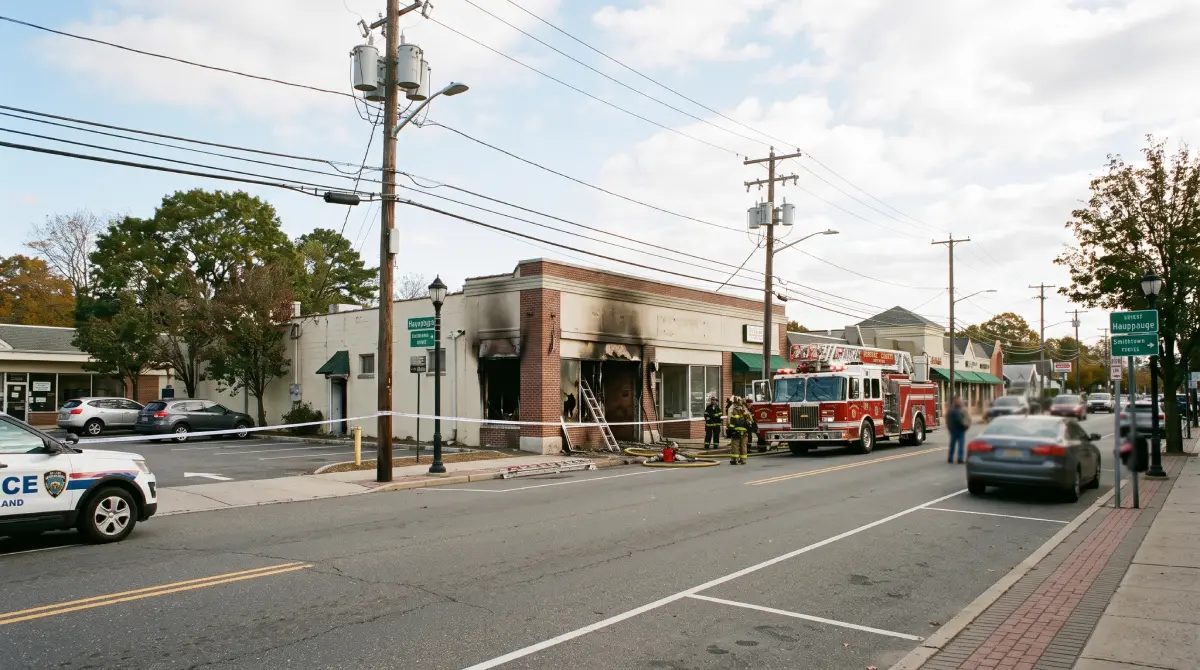
A serious burn drains your body and your savings at the same time, and the insurance company handling the fire is already building its case to pay you as little as possible. A Suffolk County burn and fire injury lawyer at Silver Law Group can take that fight off your hands while you heal, working for free until we recover money for you. Your first consultation costs nothing and is held in English, Spanish, or Russian, at our office, your home, or your hospital room, and we answer 24/7. Call 212-470-4544 to talk through what happened and what your claim is worth.
When You Have a Suffolk Burn or Fire Injury Case
Most Suffolk burn cases trace back to someone whose carelessness put the fire or heat source in your path, and naming that person is the first job. In an apartment or house fire, it is often a landlord who let smoke detectors sit dead or a property owner who ignored frayed wiring he had been warned about. Workplace burns run on a different track, from a gas line no one checked to a machine that arced while you stood beside it. Defective products bring in the manufacturer: a space heater that overheats, a charger that ignites, a lithium-ion battery that vents flame in a pack it was never rated for. After a crash, a ruptured fuel line or a battery fire can burn you long after the impact stops, which puts the at-fault driver, and sometimes the vehicle’s maker, on the hook.
The burn itself shapes the claim too, because the four main types injure the body differently and cost different amounts to treat. Thermal burns come from flame, steam, or hot surfaces and are the most common in house and car fires. Chemical burns keep destroying tissue until the substance is fully rinsed off, so the damage often runs deeper than it first looks. Electrical burns can char a small point on the skin while cooking muscle and nerve along the current’s path inside you. Scald burns from boiling liquid or steam send more people to the emergency room than any other kind and hit young children and older adults hardest. Naming the right type early tells your doctors what to look for and your lawyer which defendant to pursue.
Smoke Inhalation and Non-Visible Burn Injuries
The worst burn injury in a fire is often the one you cannot see. Hot smoke and superheated air scald the lining of your throat and lungs, and the swelling can take hours to close off your airway, so a person who walks away looking fine can struggle to breathe by that night. Swallowed hot gases can burn the esophagus from the inside, while carbon monoxide and cyanide in the smoke poison your blood at the same time. Fumes from burning plastics and furniture keep irritating lung tissue for days. Get examined the same day even if your skin is untouched, and tell the doctor you were in a fire and how long you breathed the smoke. That record is the spine of a smoke-inhalation claim, because an insurer will argue your breathing problems came from something else if no one wrote them down early.
Who Is Liable for a Suffolk Burn Injury
More than one party usually caused the fire that burned you, and naming all of them is how you reach enough insurance coverage to pay for a lifetime of care.
- A landlord who ignored a dead or missing smoke detector. New York law requires working alarms in rental units, and the failure to keep them running can make the landlord answer for the injuries that followed.
- A property owner or management company that let wiring, a boiler, or a gas line fall apart, or blocked the exit you needed to get out.
- A contractor or subcontractor whose work started the fire on a job site — faulty electrical, an unvented heater, a torch left burning near solvent.
- Your employer, in the narrow cases where the law lets you sue beyond workers’ compensation, which the next section explains.
- The maker of the appliance, space heater, wiring, or lithium-ion battery that failed. A product that catches fire in normal use can pull the manufacturer, the distributor, and the retailer into one defective-product claim. When several parties share the blame, New York lets you name each of them in the same case, and their insurers spend the fight arguing over who pays which share instead of denying that anyone owes you. That is why an early investigation matters: the wiring, the failed battery, the fire marshal’s report, and the maintenance history all get harder to recover the longer you wait.
Workplace and Construction Burn Claims in Suffolk
If you were burned on the job, workers’ compensation pays your medical bills and part of your lost wages no matter who was at fault, but it bars you from suing your own employer and never pays for pain, disfigurement, or the full value of what you lost. The way to reach real money for a severe burn is a third-party lawsuit against someone other than your employer, such as the general contractor running the site, the property owner, or the company whose equipment exploded. New York’s Labor Law gives construction workers specific grounds for those suits:
- Labor Law 240 covers elevation-related work; when a fall or a collapse touches off a fire or drops you into one, it holds owners and contractors to a strict standard.
- Labor Law 241(6) requires set safety measures on construction and demolition sites, and a violation like an ungrounded circuit, an unguarded gas line, or no fire watch during hot work can anchor your claim.
- Labor Law 200 is the general duty to keep the site reasonably safe, the fallback when a burn came from a dangerous condition the owner or contractor knew about and left alone. A gas-line fire, an arc flash, or an explosion during hot work can trigger all three at once. The same accident can support both a comp claim and a third-party suit running side by side.
What a Suffolk Burn Injury Claim Is Worth
A burn claim is built from what the injury will cost you over your whole life, not just the hospital bill sitting in front of you today.
- Reconstructive surgery and skin grafts, often across several operations as scars mature and contract over months or years.
- Future medical care, from follow-up procedures and wound care to physical therapy and treatment for the infection or nerve pain that can outlast the burn.
- Home health aides and help with daily tasks when a hand or leg burn takes away the grip or movement you relied on.
- Lost earning capacity, counting the paychecks you have already missed and the better-paying work the injury now shuts you out of.
- Disfigurement and scarring, especially on the face, hands, or anywhere others can see, which New York treats as a real and compensable harm.
- Pain and suffering, including the physical pain of burn recovery, which ranks among the worst in medicine, and the anxiety, depression, and PTSD that follow serious burns. We do not publish verdict or settlement figures, and any lawyer who promises you a number before reviewing your medical records and the available insurance is guessing. What your claim is worth turns on the depth of the burns, the surface area covered, whether the damage is permanent, your age and earning history, and how many insured parties share the fault. We build that number from your records and your treating doctors’ opinions, not from a slogan.
Steps to Take After a Burn or Fire in Suffolk County
What you do in the first days after a serious burn shapes both your recovery and your claim.
- Get to a burn center, not just the nearest emergency room. The Suffolk County Volunteer Firefighters Burn Center at Stony Brook University Hospital is the only designated burn center in the county, and its specialists can save skin and function a general ER is not equipped to.
- Keep every fire report and medical record. The fire marshal’s or fire department’s report often names the cause and origin, which is the backbone of a claim against a landlord, contractor, or manufacturer.
- Photograph everything while it still exists — your injuries as they heal, the burned room, the failed heater or charger, and the scene before anyone cleans it up.
- Hold onto the product that caused the fire. A charred space heater or battery pack is the evidence an engineer needs to prove a defect, so do not throw it out or let anyone haul it away.
- Do not give the insurance company a recorded statement. An adjuster will call within days, sound friendly, and ask questions written to pin part of the blame on you or lock in a low value before you know how bad the injury is. Tell them your lawyer will be in touch.
The Serious Injury Threshold for Vehicle-Fire Burns
After a car fire, New York’s no-fault system pays your first medical bills and lost wages, but it also blocks you from suing the driver who caused the crash unless your injury clears the serious injury threshold in Insurance Law 5102(d). Burns are one of the injuries most likely to clear it. Significant disfigurement, the kind of visible, permanent scarring a burn leaves on a face, neck, or hand, qualifies on its own, and so does permanent loss of use of a body part when a burn destroys nerve or muscle. That matters because the worst vehicle fires on Suffolk roads are the ones that leave those injuries. A high-speed impact on the Long Island Expressway, a rear-end collision on Sunrise Highway, or a rollover on the Sagtikos Parkway can rupture a fuel tank or crush a battery pack, and the fire that follows keeps burning after the cars stop. Once your burns meet the 5102(d) standard, you can sue the at-fault driver for the pain, disfigurement, and lost future earnings that no-fault will not touch.
Filing Deadlines for a Suffolk Burn Injury Claim
A burn claim runs on more than one clock, and missing the shortest one ends the case no matter how strong it is.
- Three years to sue. Under CPLR 214, you generally have three years from the date of the fire to file a personal injury lawsuit. Wait past it and the court dismisses the case without ever weighing the merits.
- Two years when the fire is fatal. If a burn or smoke-inhalation death results, EPTL 5-4.1 gives the family two years from the date of death to bring a wrongful death claim — a shorter window than the injury deadline, and one that catches many families off guard.
- Ninety days when a government body is involved. If a public agency, a housing authority, or a municipal employee had a hand in the fire, General Municipal Law 50-e requires a Notice of Claim within 90 days, and missing it usually forfeits the right to sue that agency at all. A Suffolk burn case is filed in the Supreme Court in Riverhead, and the clock does not pause while you recover in the hospital. The safest move is to have a lawyer calculate every applicable date early, because more than one can apply to the same fire.
Why Suffolk Burn Victims Choose Silver Law Group
You are choosing a burn injury attorney while you are still in treatment and worried about money, so the fee has to make sense before anything else. Silver Law Group works on contingency: you pay no hourly bill and nothing up front, we advance the costs of investigating and building your case, and our fee is a percentage of what we recover. If we recover nothing, you owe us nothing and are not billed for the costs we spent. A firm has no reason to take your case unless it believes in it. Beyond the fee, the practical support matters when you cannot easily travel:
- We answer 24/7, so the adjuster who calls the day after the fire is not the only person you can reach.
- The attorney comes to you, at your home or your bed at Stony Brook, rather than making you get to a Midtown office while you are healing.
- Your free consultation is held in English, Spanish, or Russian, so you can explain what happened in the language you think in. Our office is at 49 West 37th Street in Manhattan, and we handle Suffolk burn and fire cases across Long Island. Call 212-470-4544 to start with a free consultation.