

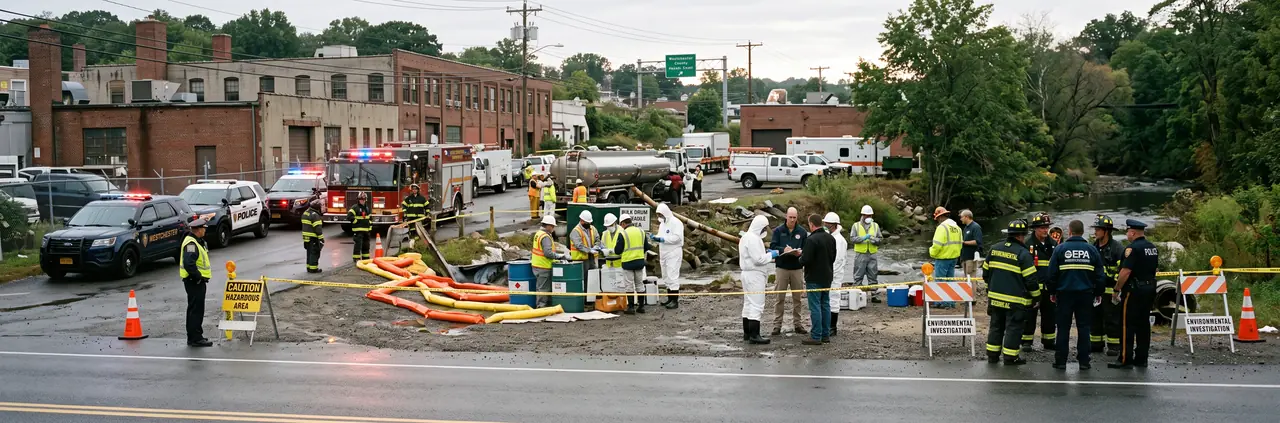
Silver Law Group’s Westchester County toxic tort lawyers handle chemical exposure claims from older rental buildings in Yonkers to contaminated wells around Cortlandt Manor. If lead paint, industrial solvents, asbestos dust or PFAS in your drinking water made you or your child sick, the company responsible can be made to pay for your medical care, your lost income and what the illness has taken from you.
Toxic injuries show up slowly. The companies behind them start building a defense long before you get a diagnosis, and most cases turn on proof of what you were exposed to and how much. The records you save this month can decide the outcome.
Your first conversation is a free consultation in English, Spanish or Russian, and you pay no fee unless you recover. Call 212-470-4544. A lawyer answers 24 hours a day.
Do You Have a Toxic Exposure Case in Westchester?
A New York toxic tort case rises or falls on expert proof. Under Parker v. Mobil Oil, the leading causation decision from the Court of Appeals, your expert has to prove three separate things:
- You were actually exposed to the substance, by breathing it, drinking it or absorbing it through your skin.
- General causation, meaning accepted science shows this chemical can cause the disease you have.
- A sufficient dose. You took in enough of it, over a long enough period, to cause your illness and not just raise a theoretical risk.
The third element is where defendants attack hardest. In Nemeth v. Brenntag (2022), the Court of Appeals rejected an expert’s testimony that the plaintiff’s exposure was “excessive” because the expert never quantified it. A word like “excessive” is not a dose. Your expert needs numbers, or a scientifically accepted way to estimate them, tied to your specific illness.
That ruling shapes how a toxic tort lawyer has to build your case from the first week. We gather the facts an expert needs to calculate exposure: how long you worked with a product, how often, whether you had ventilation or a respirator, what the air or water tests showed, and how close your home sits to the source.
Three exposure settings come up often in Westchester County: job sites, older rental buildings and contaminated groundwater.
Workplace and Construction Chemical Exposure
Workers’ compensation bars you from suing your own employer in most cases. Comp pays your medical treatment and part of your lost wages, but it pays nothing for pain and suffering. That bar protects only your employer. Other companies involved in your exposure are not covered by it.
A toxic chemical exposure attorney looks past your employer to the third parties who share responsibility. A third-party lawsuit runs alongside your comp claim and can name:
- the manufacturer or distributor of the chemical, coating or product, for a defective design or a failure to warn about the hazard
- the property owner and general contractor on a construction or renovation site, under Labor Law 241(6)
- subcontractors that controlled the work area where the exposure happened
Labor Law 241(6) places a nondelegable duty on owners and contractors to follow the state Industrial Code. If the site violated a specific Industrial Code rule and that violation contributed to your injury, the owner can be held liable even though it never handled the chemical itself.
The comp side has its own deadline. Under Workers’ Compensation Law section 28, an occupational disease claim must be filed within two years after you became disabled and knew, or should have known, that the disease came from your work. Miss that window and you can lose comp benefits even if your lawsuit is still on time.
Lead Paint Poisoning in Yonkers, Mount Vernon and New Rochelle Rentals
Public Health Law section 1377 created New York’s Lead Rental Registry. Since November 2025, it has covered rental housing in four southern Westchester ZIP codes:
- 10701 and 10705 in Yonkers
- 10550 in Mount Vernon
- 10801 in New Rochelle
In those ZIP codes, any rental building built before 1980 with two or more units must be certified every three years.
The registry makes it hard for a landlord to claim they didn’t know. In a lead paint case, proving the landlord knew about the hazard is often the hardest part. A landlord who skipped certification, or certified a unit while the paint was peeling, was on notice that lead was a risk.
For a child, the damage shows up in blood tests, so keep every result from your pediatrician. Photograph chipping paint around windows and doors. Send repair requests to the landlord in writing so each complaint carries a date.
Contaminated Well Water and PFAS in Westchester
Contaminated groundwater has turned up in several parts of the county, from PFAS in private wells to pollution under an old industrial site:
- the Armonk Private Wells Superfund site, where wells tested above New York’s 10 parts-per-trillion limit for PFOA and PFOS
- groundwater at Westchester County Airport, contaminated by firefighting foam
- Magna Metals in Cortlandt Manor, added to the federal National Priorities List in 2019
A cleanup listing deals with the contamination. It does not pay your medical bills or compensate a family living with a diagnosis. Chemical exposure lawsuits over drinking water need two kinds of proof: test results showing what was in your water and when, and medical evidence connecting those levels to your illness under the Parker standard. Claims can name the company that released the contamination and the companies that made the chemicals.
What a Westchester Toxic Tort Claim Can Recover
A successful claim can pay for losses you have already suffered and losses you will carry into the future:
- past and future medical bills, including treatment for a disease that gets worse over time
- lost earnings, plus reduced earning power if the illness ends your career early
- pain and suffering, including physical pain, loss of enjoyment of life and the strain of living with a serious diagnosis
- wrongful death damages for the family when an exposure proves fatal, such as lost financial support and funeral costs
Defendants often argue that you share the blame. They may say you skipped a respirator or stayed in an apartment after you saw peeling paint. Under CPLR 1411, New York uses pure comparative fault. Your share of fault reduces your award by that percentage but does not wipe out your claim. If a jury finds you 20 percent at fault, your damages drop by 20 percent.
CPLR 1602(9) matters when several companies caused the harm. Normally, a defendant found 50 percent or less at fault pays only its share of non-economic damages such as pain and suffering. Section 1602(9) removes that limit for a defendant held liable for unlawfully releasing a hazardous substance into the environment, so that company faces full joint and several liability.
In practice, that polluter can be made to pay the entire judgment. This protects you when a co-defendant is broke or no longer exists.
What Happens After You Call Our Toxic Exposure Attorneys
Toxic tort litigation follows a set order, because each step depends on the one before it:
- We take a detailed exposure history covering every job, every address, every product you handled and the dates. A spouse or former coworker can often fill gaps you don’t remember.
- We collect your medical records, from the first visit for symptoms through diagnosis and treatment. These records fix the date your injury was discovered, and that date starts the legal clock.
- An industrial hygienist reviews the exposure facts and estimates the levels you breathed, drank or touched. A toxicologist then connects that dose to your illness. This is the quantified proof the Nemeth decision requires.
- We name every responsible defendant. Toxic cases rarely involve just one company, and the list can include manufacturers, suppliers, property owners, contractors and polluters.
- We file in Westchester County Supreme Court at 111 Dr. Martin Luther King Jr. Blvd in White Plains. From there the case moves through discovery toward settlement or trial.
Your toxic exposure attorney stays on the file from the first interview to the courtroom. You don’t need to travel to Manhattan for any of it.
Steps to Protect Your Health and Your Claim
Your medical care comes first. The paperwork from that care also becomes the core of your claim.
- Get a full medical evaluation. Westchester Medical Center in Valhalla can run the testing and specialist workups a toxic exposure diagnosis needs. Tell every doctor what you were exposed to so it goes into your chart.
- Keep product labels, containers and the safety data sheets for any chemicals you used at work. A safety data sheet lists the hazardous ingredients and exposure warnings, and your expert will rely on it.
- Save every test result, including blood lead levels, well-water reports and air or mold testing.
- If your home runs on a private well, sign up for the state’s 2026 pilot program that offers free PFAS testing for private wells. A lab result gives your claim a dated starting point.
- Keep a written log of your symptoms and when they started.
- Speak with a chemical exposure attorney before you give an insurer a recorded statement or sign anything it sends.
What It Costs to Hire a Toxic Tort Lawyer
Silver Law Group handles toxic tort cases on a contingency fee. You pay nothing upfront and nothing by the hour. Our fee is a percentage of the money we recover for you. It comes out of the settlement or verdict when the case ends, and the percentage is set in writing before any work starts.
If there is no recovery, you owe no fee.
This matters more in toxic cases than in most injury claims. The defendants are usually large manufacturers and property companies with insurers and defense firms behind them. Cases like these need industrial hygienists and toxicologists to prove dose and causation. Because a toxic tort attorney working on contingency is paid only when you are, we take cases we believe we can prove, and we have every reason to push for full value. Your free consultation tells you whether you have a case before you sign anything.
Deadlines for Toxic Exposure Lawsuits in New York
Several deadlines can control your case, depending on who was hurt and who you are suing:
- CPLR 214-c gives you three years from the date you discovered your injury, or should reasonably have discovered it. The clock starts with the symptoms or diagnosis, not when you learn the cause.
- CPLR 214-c also has a narrow extension. If you discover the cause within five years of discovering the injury, and the science needed to identify it was not available earlier, you get one year from discovering the cause.
- EPTL 5-4.1 gives a family two years from the date of death to bring a wrongful death claim.
- GML 50-e requires a Notice of Claim within 90 days if a county defendant, such as Westchester County or one of its agencies, is responsible.
These clocks run independently. A pending workers’ comp case does not pause them, and neither do talks with an insurance adjuster. The 90-day notice runs out first, so call early if a public entity may be involved.
Why Westchester Families Choose Silver Law Group
We prepare every case as if it will be tried in White Plains. In toxic cases, defendants decide what to offer based on the strength of the expert proof, and a file built for trial shows them you are ready to go to court.
- Trial-ready preparation from the first week, with experts brought in early
- Available 24/7 at 212-470-4544
- An attorney who comes to your home or hospital room anywhere in the county, from Yonkers to Cortlandt Manor
- Free consultations in English, Spanish and Russian
- Our Midtown Manhattan office: Silver Law Group, P.C., 49 West 37th Street, 7th Floor, New York, NY 10018
Request your case review today at 212-470-4544. Tell us where you lived or worked, what you were exposed to and what your doctor found. A lawyer will tell you whether you have a claim and which deadline applies to you.