

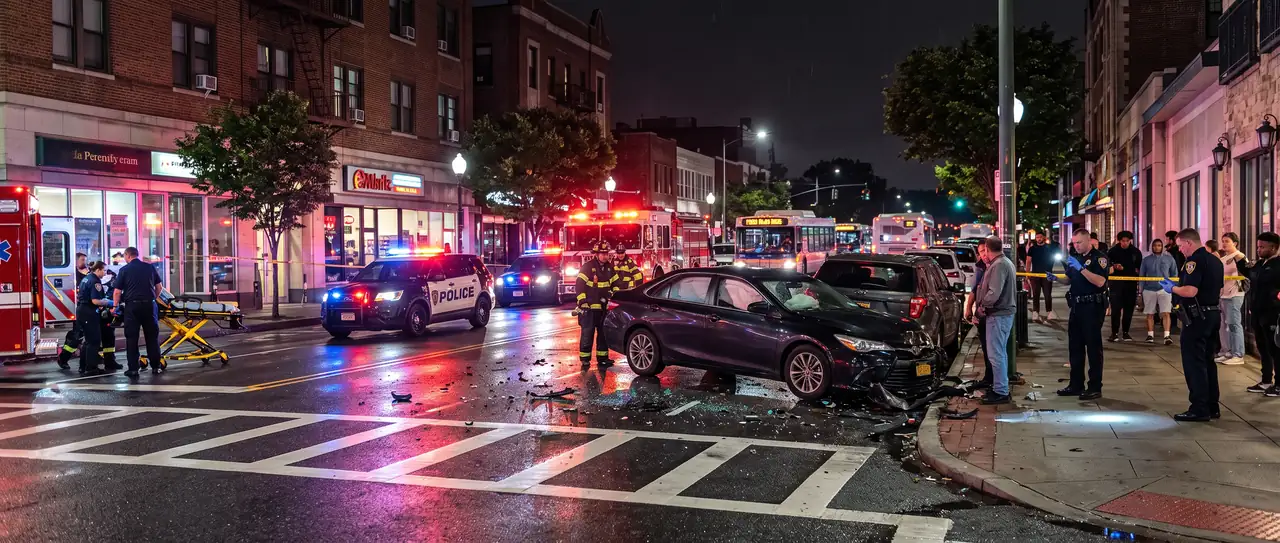
If an impaired driver injured you or killed someone you love, a Westchester County drunk driver accident attorney at Silver Law Group can start work on your claim today. We represent people hurt by drunk and drugged drivers anywhere in the county, from Yonkers and Mount Vernon north to Peekskill. A DWI crash can give you more defendants than an ordinary collision. The driver is one, and the car’s owner and the bar that kept serving may be others. It also produces evidence that disappears fast, such as surveillance video a bar can record over and a breath test result buried in a police file. The consultation is free, the phone is answered 24/7, and a lawyer can meet you at home or in the hospital. Call 212-470-4544.
Were You Hit by a Drunk Driver in Westchester County?
Westchester County Police made 269 DWI-related arrests in 2023. That count covers one department. City, town and village police and State Troopers make their own arrests on top of it, and every arrest means an impaired driver who was already on the road.
Many of those drivers were stopped on the county’s parkways and interstates. Several of these roads have narrow lanes and tight curves with little shoulder, and an impaired driver has almost no room to correct a mistake. The routes that appear again and again in Westchester DWI crashes include:
- The Hutchinson River Parkway, which runs from the Bronx line to the Connecticut border
- The Bronx River Parkway, which follows the river valley north to Valhalla
- The Saw Mill River Parkway on the county’s west side
- The Sprain Brook Parkway, which runs parallel to the Saw Mill
- The Taconic State Parkway, with long dark stretches through northern Westchester
- I-287, the Cross Westchester Expressway, which links the Hudson to the Sound shore
- I-95, the New England Thruway, which runs through New Rochelle, Mamaroneck and Rye
The location of the crash shapes your case from the first day. It tells us which police agency wrote the report and which agency holds the breath or blood test. It also points to the bars and restaurants along the drunk driver’s likely route home.
Wrong-Way Drunk Drivers on Westchester Parkways
On September 8, 2024, a wrong-way driver crashed on the Hutchinson River Parkway near King Street in Rye Brook. The driver was charged with vehicular manslaughter and DWI. A crash like this joins two vehicles’ speeds into one frontal impact, and the human body absorbs that force in predictable ways.
- Traumatic brain injury from the head striking the airbag, pillar or window
- Chest and internal organ injuries from the seatbelt and steering column
- Hip, pelvis and thigh fractures when the knees hit the dashboard
- Crushed ankles and lower legs when the footwell folds inward
- Neck and spinal cord injuries from violent forward-and-back motion
Some of these injuries, especially brain injuries, take days to show. A CT scan or neurology exam done early creates the medical record your claim depends on.
Who Can Be Held Liable for Your Injuries
A drunk driving crash often has more than one responsible party, and each one can bring another insurance policy into the case. New York law lets you pursue:
- The impaired driver. Driving drunk breaks Vehicle and Traffic Law 1192, and that violation is strong evidence the driver was negligent.
- The vehicle owner under VTL 388. If the drunk driver borrowed the car from a parent, a friend or an employer, the owner is liable for the negligence of anyone driving with permission. Permission can be express or implied.
- Anyone who gave alcohol to a driver under 21, under General Obligations Law 11-100. This covers an adult who knowingly furnished alcohol to someone they knew, or had reason to believe, was underage. It can include a party host or an older friend who bought the drinks.
This matters because the drunk driver’s own policy is often the smallest one in the case. The owner’s coverage and a homeowner’s policy can sit behind it, and so can a bar’s commercial policy (covered next). We identify every one of them before any settlement talks begin. A settlement with one party can affect your claims against the others.
Suing a Bar That Overserved the Drunk Driver
New York’s Dram Shop Act, General Obligations Law 11-101, lets you sue a bar, restaurant or liquor seller whose unlawful sale caused or contributed to the driver’s intoxication. The statute allows actual damages, which cover your real losses, and exemplary damages, which punish the seller. The key element is an unlawful sale to a driver who was visibly intoxicated. A blood alcohol number alone does not prove that. Witnesses have to describe what the bartender could see, such as slurred speech, stumbling, or a driver who could barely sit on a stool.
The Mamaroneck Avenue bar strip in White Plains is a common starting point. A drunk driver who leaves a downtown bar there can be on I-287 or the Bronx River Parkway within minutes. The proof that connects the bar to your crash goes stale quickly, so these items need to be locked down early:
- Bar tabs, receipts and credit card records showing what the driver bought and when
- Interior and exterior surveillance footage
- Rideshare receipts, payment app transfers and social media posts from that night
- Names of the bartenders, servers and other patrons
A preservation letter goes out to the bar within days of when we take your case.
The DWI Prosecution and Your Injury Lawsuit Are Separate
The criminal case belongs to the Westchester County District Attorney’s Office. Prosecutors charge the driver under VTL 1192, where a blood alcohol concentration of .08 is DWI on its own (the “per se” offense) and .18 or higher is Aggravated DWI. The DA decides what to charge, whether to offer a plea, and when the case goes to trial. You are a witness in that case. You are not a party to it, and any restitution order is not built to cover a lifetime of medical care.
Your injury lawsuit is yours. It is filed in Westchester County Supreme Court in White Plains, and you decide whether to settle or go to trial. The standard of proof is lower in civil court. The jury asks whether the driver was more likely than not at fault, not whether guilt was proven beyond a reasonable doubt.
A conviction or guilty plea helps your civil case because it is powerful evidence of the driver’s impairment. You do not need one. If the charge is pleaded down, dismissed, or ends in an acquittal, your civil claim still goes forward. We follow the criminal docket closely, because testimony, test results and the plea record can all strengthen the civil file.
What Your Drunk Driving Injury Claim Is Worth
The value of your case depends on what the crash took from you and how well each loss is documented. A drunk driving car accident lawyer builds that record around three categories:
- Medical costs, past and future: emergency care, surgery, rehabilitation, medication, home care and the treatment a doctor says you will need years from now
- Lost earnings: missed paychecks plus reduced earning ability if your injuries change the work you can do
- Pain and suffering: physical pain, emotional distress, and the parts of daily life you can no longer enjoy
No-fault insurance pays your basic medical bills and lost wages first, regardless of who caused the crash. To sue the drunk driver for pain and suffering, your injury has to meet the serious injury threshold in Insurance Law 5102(d). That includes death, dismemberment, significant disfigurement, a fracture, loss of a fetus, permanent loss of use of a body organ, member, function or system, and permanent consequential or significant limitation of a body organ or system. It also covers an injury that keeps you from your usual daily activities for 90 of the first 180 days after the crash. Most injuries from a head-on parkway collision clear this bar. Softer injuries need careful medical documentation to qualify.
The insurer may argue you share some of the blame, for example because you were speeding slightly or not wearing a seatbelt. Under CPLR 1411, New York’s comparative fault rule, your share of fault reduces your recovery but never bars it. If a jury finds you 10 percent at fault, you collect 90 percent of your damages.
Punitive Damages Against an Intoxicated Driver
Punitive damages punish conduct, and New York courts do not award them for intoxication alone. The Appellate Division made that clear in Taylor v. Dyer, 190 AD2d 902. A drunk driving injury lawyer has to show more, such as:
- An extreme blood alcohol concentration, far above the legal limit
- Prior DWI arrests or convictions showing the driver knew the risk and drove anyway
- Reckless driving on top of the intoxication, such as wrong-way travel, excessive speed or fleeing the scene
Drivers sometimes threaten bankruptcy to scare off a lawsuit. Federal law blocks that move. Under 11 USC 523(a)(9), a debt for death or personal injury caused by someone driving while intoxicated from alcohol or drugs cannot be wiped out in bankruptcy. Your judgment follows the driver.
When the Drunk Driver Is Uninsured or Underinsured
Drunk drivers are often the drivers carrying the least insurance, or none. Your recovery does not have to stop at their policy limits. Other sources include:
- SUM coverage on your own policy. Supplementary uninsured/underinsured motorist coverage pays when the at-fault driver’s insurance runs out. Your insurer must be notified early, and your policy can require its written consent before you accept the drunk driver’s limits. Settling without that consent can cost you the SUM claim.
- MVAIC. If you have no auto policy of your own to turn to, the Motor Vehicle Accident Indemnification Corporation can cover injuries caused by uninsured and hit-and-run drivers. MVAIC has its own short filing deadlines and requires prompt reporting to the police.
- The bar’s commercial liability policy. A dram shop claim brings in the bar’s own insurer, and its coverage is separate from anything the drunk driver carried.
We check each of these at the start of your case, before any deadline passes.
What a Drunk Driver Accident Lawyer Costs
You pay nothing upfront. Silver Law Group works on a contingency fee, which works like this:
- Our fee is a percentage of the money recovered for you, set in writing in your retainer agreement before any work begins.
- We are paid only from a settlement or verdict, at the end of the case.
- If there is no recovery, there is no fee.
This structure means you can hire a drunk driver car accident attorney the same week as the crash, while you are out of work and the medical bills are arriving. It also gives us a direct reason to build the strongest case we can.
Deadlines to Sue After a Westchester DWI Crash
New York sets hard filing deadlines, and a court will dismiss a late claim no matter how strong it is. The ones that apply after a DWI crash are:
- CPLR 214: three years from the crash to sue the drunk driver, the vehicle owner, and a bar under the dram shop law.
- EPTL 5-4.1: two years from the date of death to file a wrongful death action.
- GML 50-e: if the drunk driver was driving a vehicle owned by Westchester County, a city, a town or a village, a Notice of Claim must be served within 90 days.
- GML 50-i: the lawsuit against that municipality must then be filed within one year and 90 days.
The 90-day municipal notice catches many families off guard. Call early, even if you are unsure who owned the vehicle.
Talk to a Westchester Drunk Driver Accident Attorney Today
The evidence in a drunk driving case has a short life. Bar video can be recorded over. Witnesses move or forget, and a crashed car can be repaired or scrapped along with its event data recorder. The sooner you call, the more of that proof we can hold onto.
Consultations are free and available in English, Spanish and Russian, by phone at any hour. Every case is prepared for trial from the first day. Insurers pay closer attention when they know the file is being built for a jury in White Plains, not just for a settlement call. Our office is at 49 West 37th Street, 7th Floor, New York, NY 10018 in Midtown Manhattan. If your injuries keep you in Westchester, an attorney will come to your home or hospital room.
Call 212-470-4544 today, before the evidence against the drunk driver disappears.