

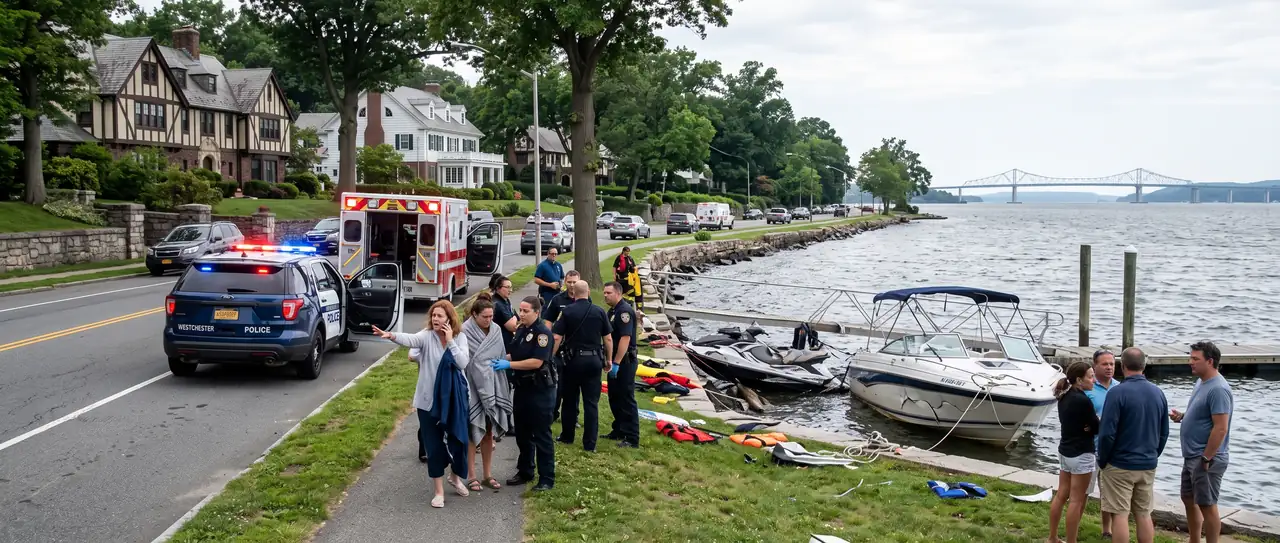
A Westchester County boat accident lawyer at Silver Law Group handles injury claims from the county’s Hudson River shoreline, from Yonkers to Peekskill, and from Long Island Sound between New Rochelle and Port Chester. If another boater’s carelessness put you in the hospital, your claim follows rules that have little in common with a car crash case.
New York’s no-fault insurance does not pay for boating injuries. Federal maritime law can apply on the Hudson and the Sound. A boat owner can also ask a federal court to cap what you collect, and the window for that filing opens the day you send a written claim. These rules favor whichever side moves first.
Consultations are free, and the phone is answered 24/7 at 212-470-4544.
Do You Have a Boat Accident Case in Westchester?
You have a case if someone else’s negligence on the water caused your injury. Proving it usually starts with how the boat was being run. Negligence on the water tends to take one of these forms:
- Speeding through crowded water, especially near marina entrances and no-wake zones where other boats are slowing to dock
- No lookout. An operator watching a phone or the passengers instead of the water ahead can run down a kayak, a swimmer or a moored boat without ever seeing it.
- Wake strikes, where a large boat passes close and fast and its wake throws people off a smaller boat or into a gunwale or cleat
- Overloading with more people or gear than the capacity plate allows, which leaves the boat riding low and quick to swamp
Two state laws often turn a disputed story into one you can prove. Since January 1, 2025, Brianna’s Law has required every motorboat operator in New York to hold a boating safety certificate, whatever their age. An operator who never took the course has no record of the training the law requires. That gap gives your boat accident attorney a direct line of questioning about whether the operator knew the rules on the water.
Navigation Law 49-a sets the limit for boating while intoxicated at 0.08 blood alcohol content. If police test the operator after a crash, the result is evidence collected by an officer who has no stake in your claim.
Ferry, Charter, Yacht and Fishing Boat Passengers
Passengers don’t steer the boat. That’s why their claims seldom turn on what they did, and why they usually point straight at the company or captain in charge.
NY Waterway runs the Haverstraw–Ossining ferry across the Hudson. Falls on a wet deck or gangway, hard landings at the dock and injuries while boarding all lead to claims against the operator, which is responsible for its crew, its equipment and the condition of its boarding areas.
Charter and fishing captains answer for their decisions at the helm. Examples include heading out in weather they should have waited out, letting a deck stay slick and racing back to the dock. A fishing boat accident attorney will also check whether the boat had enough crew and equipment for the number of people on board.
A private yacht host who invites guests aboard owes them reasonable care. A yacht injury lawyer will look at how the host ran the boat and at the condition of its ladders, hatches and railings.
Commercial operators also face a stricter alcohol rule. For anyone operating a public vessel, meaning a boat used for commercial purposes such as a ferry or charter, the limit is 0.04, half the recreational limit.
Jet Ski and Personal Watercraft Collisions
The Westchester County Police Marine Unit has cracked down on reckless personal watercraft riding near Croton Point Park. A ticket or arrest from that patrol becomes part of the record in a civil claim.
A swimmer hit near shore, a tuber thrown when the towing boat cut a sharp turn and a rider struck by another jet ski can all bring claims against the operator at fault. When someone is being towed, the tow boat’s driver is responsible for the speed, the turns and whether anyone on board was watching the person in tow. If you were hurt on a rented machine, the rental company may share the blame.
Who Is Liable for a Boating Injury on Westchester Waters
More than one party is often responsible. Finding all of them decides how much insurance is available to pay you.
- The operator at the helm, for speed, lookout, alcohol and the choices made in the seconds before impact.
- The owner, even if someone else was driving. Navigation Law 48 makes the owner liable for injuries caused by the negligence of anyone using the boat with the owner’s permission, express or implied. This matters because the boat’s insurance policy is normally in the owner’s name.
- Rental companies that hand a jet ski or powerboat to someone with no instruction, skip the safety briefing or rent out a machine with a sticking throttle
- Marinas that let docks, walkways, fuel docks or launch ramps under their control stay in unsafe condition
- Manufacturers and parts makers, when a steering cable fails, a fuel line leaks or a design leaves a propeller exposed where a swimmer can reach it
A boating injury law firm looks into all of these parties at once. Footage from a marina camera or a rental company’s maintenance log can be recorded over or thrown away while you are still in treatment.
If the other side says you share the blame, you can still recover under CPLR 1411. New York uses pure comparative fault. Your award is reduced by your share of the fault, and you keep the rest. A passenger found 20 percent at fault for standing while the boat was moving still collects 80 percent of their damages.
What a Westchester Boat Accident Claim Is Worth
New York’s no-fault insurance does not apply to boats. No-fault, along with the Insurance Law 5102(d) serious-injury threshold that limits pain-and-suffering lawsuits after car crashes, covers only motor vehicles as defined in Vehicle and Traffic Law 311. A boat is not one of them.
That has two effects. First, no no-fault benefits pay your medical bills or lost wages in the early months, so those costs go through your health insurance or come out of pocket until your claim is resolved. Second, you don’t have to prove a “serious injury” before suing for pain and suffering, which takes away a defense insurers rely on in car cases.
Boating injuries are often severe, and the damages follow the injury:
- Propeller wounds that need several surgeries, skin grafts or scar revision, with damages for disfigurement and future procedures
- Traumatic brain injury from hitting a console or the water, including cognitive therapy and lost earning capacity
- Near-drowning, where lack of oxygen can cause brain or lung damage whose full extent may not be clear in the first days
- Hypothermia from time in cold water, with hospital care and any complications that follow
Every claim also includes past and future medical costs, lost pay, and the pain and lost daily life the injury caused. What your claim is worth depends on the evidence behind each item, so medical records from the first week carry a lot of weight.
Maritime Law vs. New York Law After a Boat Crash
The Hudson River and Long Island Sound are navigable waters. A crash there can fall under federal admiralty jurisdiction instead of ordinary New York negligence law, which changes the rules that apply and sometimes the court that hears the case.
Many maritime injury claims can still be filed in Westchester County Supreme Court in White Plains, with federal maritime rules applied where they control. Other cases belong in federal court. The forum affects procedure and who decides the case, so your lawyer should choose it at the start rather than let the defense choose it later.
The federal rule that matters most is one owners use against injured people. Under 46 U.S.C. 30529, a boat owner can ask a federal court to limit liability to the value of the boat after the accident. The owner has six months from receiving written notice of a claim to file. Once that filing is made, other lawsuits are normally stopped, and every injured person is pulled into one federal proceeding.
That makes your first demand letter a strategic document. It starts the owner’s six-month clock, so it should go out when the evidence is ready to defeat the limitation, usually by showing that the owner knew about the condition or the operator that caused the crash.
What to Do After a Boating Accident on the Hudson or Sound
What you do in the first five days shapes much of what follows.
- Radio a mayday or call 911. On the Sound, the Rye, New Rochelle and Mamaroneck police marine units patrol their harbors, and the officers who respond write the first report anyone will read.
- Get examined the same day, even if you feel fine. Westchester Medical Center in Valhalla is the county’s Level I trauma center and treats the most serious water injuries, including head trauma and near-drowning.
- Make sure the written report is filed. Navigation Law 47-b requires the operator to file a written report within five days of any accident that causes injury, death, a disappearance or more than $1,000 in damage. If you were a passenger, ask the operator for a copy. If you were operating, file the report yourself and stick to facts without guessing about fault.
- Photograph both boats, their registration numbers, the scene and your injuries. Get names and phone numbers from people on nearby boats.
- Send nothing in writing to the other owner or their insurer, and give no recorded statement, before you speak with a lawyer. A written claim starts the owner’s six-month filing window, and a recorded statement will be used to argue that you share the fault.
How Much a Westchester County Boat Accident Lawyer Costs
You pay nothing up front, and you owe no fee unless you recover. Silver Law Group works on contingency, which means:
- the fee is a percentage of the settlement or verdict, agreed in writing before work begins
- no recovery means no fee
- the firm advances case costs, such as marine surveyors, accident reconstruction experts and medical records, so you don’t pay experts out of pocket while the case moves forward
You don’t have to travel to Manhattan while you recover. A lawyer will come to your home anywhere in Westchester, or to your hospital room at Westchester Medical Center, to sign you up and start the investigation.
Deadlines for Westchester Boat Accident Claims
Boat cases have overlapping deadlines, and the shortest one that applies to you sets the schedule.
- Three years from the accident to sue for personal injury under CPLR 214. Federal maritime injury claims have the same three-year limit under 46 U.S.C. 30106.
- Two years from the date of death for a wrongful death claim under EPTL 5-4.1.
- 90 days to serve a Notice of Claim under General Municipal Law 50-e when a city or village is responsible, such as for an injury at the New Rochelle Municipal Marina or Mamaroneck Harbor Island
- Six months for the owner’s limitation filing, counted from your written claim, which can move your case into federal court on the owner’s schedule
The 90-day notice is the deadline people miss most often. A broken dock board or a defective launch ramp at a municipal marina is a claim against the government, and missing the notice can end that part of your case before you have finished treatment.
If public property played any role in your injury, call within weeks, not months.
Why Westchester Boaters Call Silver Law Group
Every case is prepared for trial from the first day. An insurer treats a file that is ready for a jury differently from one it expects to settle quietly. If your case is filed in state court, it would be tried at the Westchester County Supreme Court, 111 Dr. Martin Luther King Jr. Blvd, White Plains.
- Free consultations in English, Spanish and Russian
- Calls answered 24/7, including weekends during boating season
- Office at 49 West 37th Street, 7th Floor, New York, NY 10018, in Midtown Manhattan
Call 212-470-4544 to speak with a boating injury attorney about what happened on the water and which deadlines already apply to you.
A Recent Westchester Crash: Milton Harbor, Rye
At about 10 p.m. on July 19, 2024, two boats collided in Long Island Sound just south of Milton Harbor in Rye. Police charged the operator of one boat with boating while intoxicated, which is an allegation, not a conviction. Five people were hurt, and two were thrown into the water. One was taken to Westchester Medical Center with a head injury.
A crash like this creates two separate cases. The criminal BWI case belongs to the prosecutor. Each injured person’s civil claim runs on its own clocks: three years to sue, and the owner’s six-month limitation window once a written claim goes out. The police marine report and any test results from that night can serve as evidence in the civil claim, so request them early.