

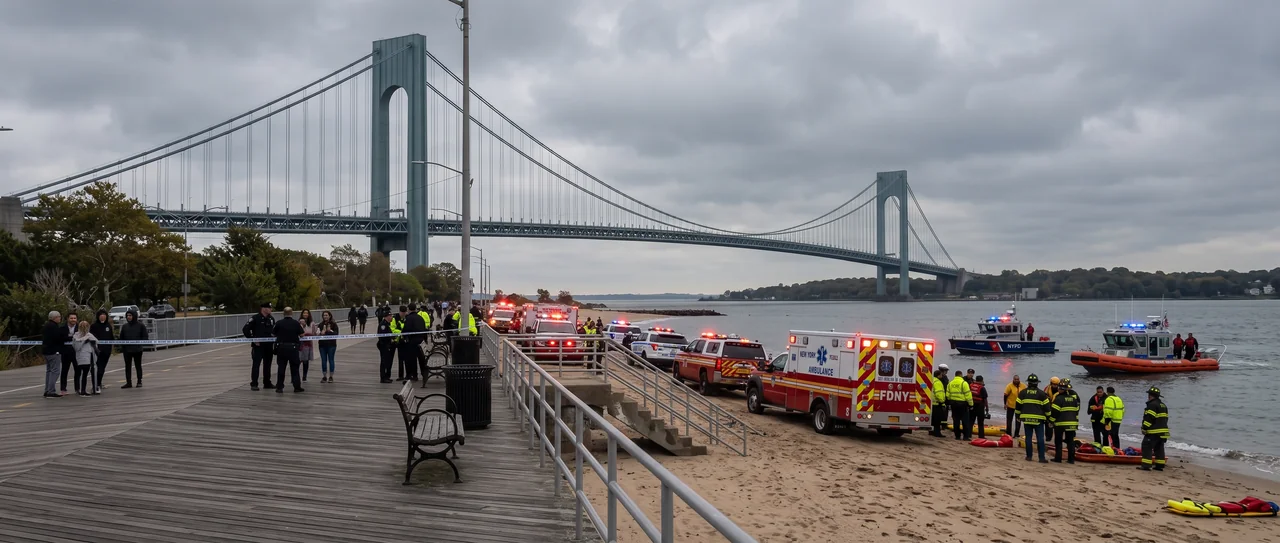
If you or someone in your family was pulled from a pool, a Raritan Bay beach, or the water off Great Kills Harbor, a Staten Island drowning accident attorney at Silver Law Group can tell you whether you have a claim and who is responsible for it. We represent drowning and near-drowning victims across Staten Island: people left with brain injuries, families who lost a child, survivors facing years of care. The first conversation costs nothing and puts you under no obligation. You can reach us 24 hours a day, and we handle consultations in English, Spanish, and Russian. Call 212-470-4544 and speak with someone who can answer your questions today.
Do You Have a Drowning or Near-Drowning Case?
A drowning case turns on a simple question with a hard answer: did someone who controlled the water owe you safety, and did they fail to provide it? New York negligence law breaks that into four parts. Someone had a duty to keep the space reasonably safe. They breached it. The breach caused the drowning or near-drowning. And you suffered real harm from it. Premises liability is the version of this that applies to property, where the person who owns or runs the pool, beach, or dock is responsible for hazards they knew about or should have found and fixed.
Who that person is depends on where you were hurt. Liability can fall on:
- a homeowner whose backyard pool had no working gate or alarm
- the operator running a public or club pool without enough lifeguards
- a landlord who let a building’s pool fencing rot
- a boat operator who took passengers out without life vests or sober judgment
- the employer of a lifeguard who left a post or missed a swimmer in distress
You do not lose your case by being partly at fault. Under CPLR 1411, New York uses pure comparative fault, so your recovery is reduced by your share of responsibility but never erased by it. If a jury finds you 30 percent responsible for swimming past a marker, you still recover 70 percent of your damages. Insurance adjusters lean hard on the idea that you caused your own injury, because they know most people believe partial fault ends a claim. It does not, and a drowning lawyer will hold the other side to what they can actually prove.
Where Staten Island Drownings Happen: Pools, Beaches, and Boats
The water that draws Staten Island families in summer carries different risks depending on where you are standing. The borough’s public pools — Lyons in Tompkinsville, Faber in Port Richmond, and the Tottenville pool on the South Shore — pack crowds into a few lifeguarded hours, and a single guard watching an overfull pool can miss a child going under in seconds.
On the shoreline, South Beach, Midland Beach, Wolfe’s Pond, and Cedar Grove all sit on Raritan Bay, where the hazard is not just depth. The bay has steep drop-offs, currents that pull swimmers past the guarded zone, and stretches that stay open to foot traffic long after the lifeguards leave for the day. People wade in where no one is watching and get into trouble fast.
Great Kills Harbor is the borough’s boating center, and boat drownings follow their own pattern: a passenger goes overboard, no one is wearing a life vest, and a delayed or impaired operator turns a recoverable fall into a fatal one. Cold water below the surface can incapacitate a strong swimmer within minutes, well before help arrives.
Each of these settings hands a drowning lawyer a different set of questions, from how many guards were scheduled to whether the beach was flagged closed to whether the boat carried required safety gear. The place you were hurt shapes who is on the hook for it.
Child Drownings in Unfenced Residential Pools
A backyard pool is a magnet for a small child, and the law recognizes that. Under the attractive-nuisance doctrine, a Staten Island homeowner can be liable when a young child wanders into an unsecured pool and drowns, even though the child was not invited and an adult in the same spot would be treated as a trespasser. The reasoning is that a pool’s pull on a curious four-year-old is foreseeable, so the duty to fence and lock it falls on the owner.
New York requires residential pools to be enclosed by a barrier with a self-closing, self-latching gate. A homeowner who props that gate open, lets the fence fall into disrepair, or skips the barrier entirely has created exactly the risk the rule exists to prevent. The stakes are not abstract: the CDC reports that drowning is a leading cause of unintentional-injury death for children ages one to four. For that age group, a few unwatched seconds and an open gate are all it takes.
Suing the City for a Public Pool or Beach Drowning
When a drowning happens at a city pool or a public beach, the responsible party is often New York City itself, through the Parks Department that runs the site and staffs the lifeguards. Suing the City is possible, but it runs on a separate, much faster track than a case against a private homeowner, and missing the first deadline can end the claim before it starts.
Before you can sue NYC Parks, you must file a Notice of Claim. Under General Municipal Law 50-e, that notice has to reach the City within 90 days of the drowning. It states who was hurt, when, where, and how, and it gives the City the chance to investigate while the facts are fresh. Skip it or file it late, and a court can throw out an otherwise strong case. Ninety days moves quickly when a family is grieving or a survivor is still in the hospital, which is why getting a drowning lawyer involved early matters so much here.
The City’s own rules also shape liability. On Staten Island’s public beaches, swimming is permitted only between 10am and 6pm, when lifeguards are on duty. When the Parks Department flies a red flag and closes the water, or when a guard is absent during posted hours, that decision creates a record. If the water should have been closed, or lifeguards who were supposed to be there were not, the City’s failure moves to the center of the case. A claim against the City lives or dies on these details, so preserving the staffing and closure records early is part of building it.
Near-Drowning Brain Injuries and Lifetime Care
Surviving a drowning is not the same as walking away from it. When the brain goes without oxygen underwater, cells begin to die within minutes, and the resulting hypoxic brain injury can be permanent even after the heart is restarted and the lungs are cleared. A person who is pulled out and revived may still face memory loss, trouble speaking or moving, seizures, or cognitive impairment that never lifts.
Shallow-water blackout is a quieter version of the same danger. A swimmer holds their breath, hyperventilates first to stay under longer, and passes out without any warning or struggle. There is no thrashing for a lifeguard to spot. The swimmer simply stops moving and sinks, which is why these events so often happen a few feet from safety and go unnoticed until it is too late.
The medical and legal consequences run together. Permanent cognitive damage from a near-drowning can meet the threshold for a serious injury under Insurance Law 5102(d), the category that opens the door to fuller compensation for pain and long-term loss. A survivor pulled from the water on Staten Island is often stabilized in the emergency department at Staten Island University Hospital, and those first records, from oxygen-deprivation time to initial neurological findings and imaging, become the backbone of proving how severe the injury really is. Lifetime care for a hypoxic brain injury can mean therapy, supervision, and lost earning capacity across decades, and the value of a claim has to account for all of it.
Compensation for a Fatal Drowning
When a drowning takes a life, New York law lets the family bring two connected claims, and each covers a different kind of loss. A wrongful-death claim compensates the surviving distributees, meaning the spouse, children, or parents the law recognizes as heirs, for what the death cost them. New York measures that loss in economic terms, which is narrower than many families expect: the income the person would have earned and contributed, the value of the services they provided at home, and the funeral and burial expenses the family has to pay.
For a child or a parent, the law also recognizes the loss of guidance, nurture, and instruction a parent would have given. This is how the system accounts for the fact that a drowned parent leaves children without daily care and direction that has real, if hard-to-price, value.
The second claim belongs to the person who died. A survival action recovers for the conscious pain and suffering the victim experienced between the moment of injury and death. In a drowning, that can mean the terror and physical agony of the minutes underwater, if the evidence shows the person was aware. It is a difficult thing for a family to confront, but it is a distinct and compensable harm, and proving it takes careful reconstruction of what happened in the water. A drowning lawyer handles both claims together so nothing the family is owed gets left out.
How We Build Your Staten Island Drowning Claim
Evidence in a drowning case disappears fast, and the work of saving it starts the day you call. Staffing schedules get overwritten, footage loops and erases, and memories blur. Building your claim means locking down the proof before it is gone:
- lifeguard staffing records showing who was scheduled and who was actually on the stand when the drowning happened
- pool inspection reports and 311 complaint logs that reveal whether the hazard had been flagged before
- surveillance footage from the pool deck, boardwalk, or nearby cameras, requested in writing before it is recycled
- witness statements from other swimmers, guards, and bystanders, taken while the day is still sharp in their minds
Against the City, this often means serving demands and preservation letters on the Parks Department quickly, so records tied to a public pool or beach are not lost to routine deletion. Each piece fits into the negligence picture: the staffing gap that left a swimmer unwatched, the complaint that shows the owner knew, the footage that shows how long a child was under.
A Staten Island drowning case is filed in Richmond County Supreme Court in St. George, the trial court that hears the borough’s injury and wrongful-death claims. Preparing the case as if it will be tried there, rather than assuming it settles, is what keeps the other side honest and keeps your options open.
Deadlines to File a Staten Island Drowning Claim
A drowning claim runs on more than one clock, and the shortest one controls everything. Miss it and it does not matter how clear the other side’s fault is.
For a near-drowning injury caused by a private party, CPLR 214 gives you three years from the date of the incident to file suit. If the drowning was fatal, a different rule applies: EPTL 5-4.1 sets the wrongful-death deadline at two years from the date of death, not the date of injury. Families sometimes assume they have the full three years and lose the case by waiting.
When the defendant is the City, whether a public pool or a lifeguarded beach, the deadlines tighten sharply. You have 90 days to file the Notice of Claim, and then one year and 90 days from the drowning to actually start the lawsuit. That is far shorter than the three-year window for a private claim, and it is unforgiving. A case that would be perfectly timely against a homeowner can already be dead against the City.
Because a single drowning can involve both private and public defendants on different clocks, the safest move is to have a drowning lawyer sort out which deadlines apply while there is still time to meet all of them.
Why Staten Island Families Choose Silver Law Group
You are worried about money right now, which is exactly why the fee structure matters. Silver Law Group works on a contingency fee, so you pay no attorney’s fee up front and no fee at all unless we recover money for you. Our fee comes as a percentage of the recovery at the end, which ties the cost of hiring us entirely to whether we win. If there is no recovery, you owe us nothing for our work. A grieving family or an injured person healing at home does not need a legal bill on top of everything else, and this arrangement keeps a lack of money from ever being the reason a good case goes unfiled.
We prepare every case as if it is going to trial. Insurers offer more when they can see the file is built to be tried, not just settled, and that readiness protects your leverage in negotiation and in a Richmond County courtroom alike.
If your injury or your grief makes it hard to travel, an attorney will come to your home or your hospital room to meet with you. The first consultation is free, available around the clock, and handled in English, Spanish, or Russian. Call 212-470-4544 when you are ready to find out where you stand.