

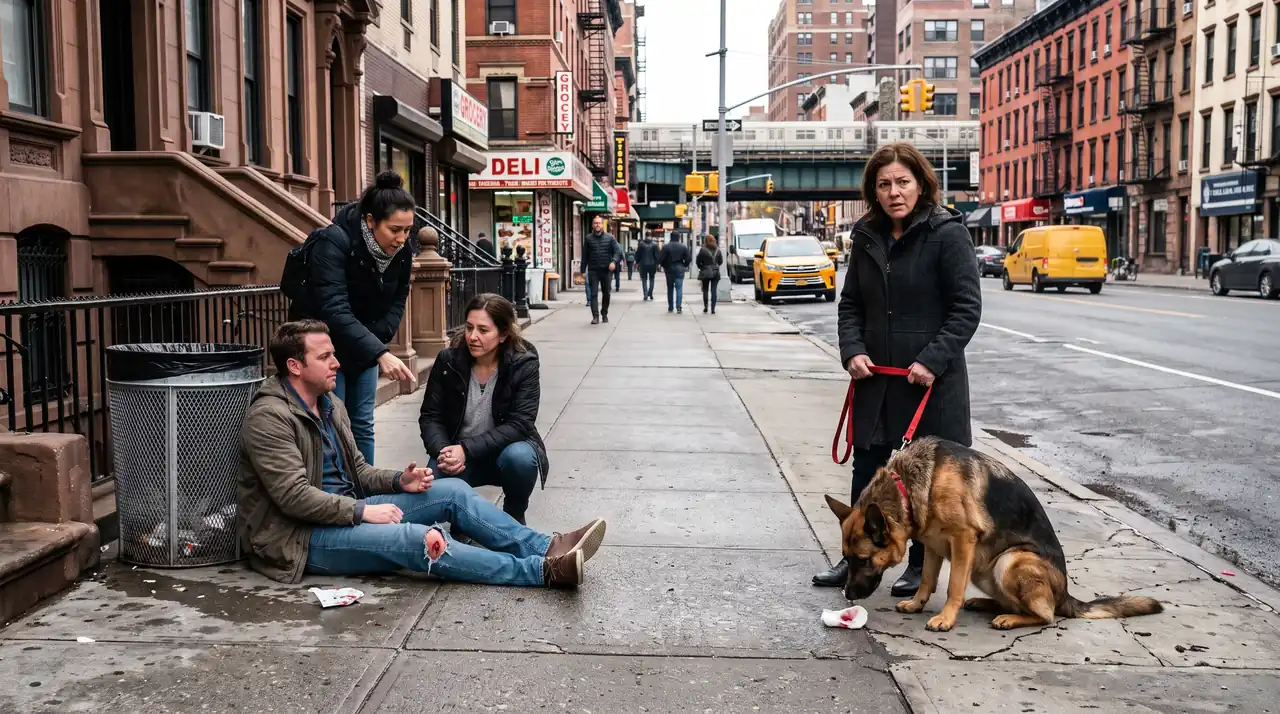
A dog bite on Staten Island can leave you with a hospital bill, a scar you will see in the mirror every morning, and an insurance adjuster on the phone before your stitches come out. A Staten Island dog bite attorney at Silver Law Group handles those calls so you can heal instead of arguing. The first consultation is free, available any hour of the day or night, and offered in English, Spanish, and Russian. You pay nothing up front; the fee comes out of the recovery as a percentage, so if there is no recovery, there is no fee. When the injury keeps you at Staten Island University Hospital or stuck at home, the attorney comes to you. Call 212-470-4544 and find out whether the dog’s owner, a landlord, or someone else owes you for what happened.
Do You Have a Dog Bite Case in Staten Island?
For years, New York gave dog owners an easy escape: if the dog had never bitten anyone before, the victim usually lost. That rule broke in April 2025. In Flanders v. Goodfellow, the New York Court of Appeals overruled its own 2006 decision in Bard v. Jahnke and gave bite victims a second way to win.
You now have two separate tracks to hold an owner responsible, and a strong case often uses both. The first is strict liability. If the owner knew or should have known the dog had a dangerous streak — a prior bite, lunging at people, aggressive barking behind a fence, a “Beware of Dog” sign — you do not have to prove the owner was careless. Knowledge of the dog’s vicious propensity is enough, and the owner pays.
The second track is ordinary negligence, and it is new. Now you can argue the owner simply failed to control the dog with reasonable care, whether or not the dog ever showed its teeth before. That matters because most Staten Island bites come from a dog with no bite on record.
Many law firm pages still tell Staten Island readers that a first-time bite is a dead end. After Flanders, that advice is out of date and can cost you a claim you were entitled to bring. The right question is no longer “did this dog bite before” but “did the owner know the dog was dangerous, or fail to control it.” A dog bite lawyer reads the facts for both angles at once, because a detail that seems minor to you often decides which track carries the case.
The New Negligence Path After a First Bite
The clearest negligence cases involve a dog that got loose. An owner who lets a dog off its leash in a Staten Island park, or whose gate latch fails and lets the dog bolt into the street, has arguably failed the reasonable-care standard even if that dog had a clean record.
Before Flanders, none of that mattered without proof the dog had bitten someone first. Bard v. Jahnke shut the door on negligence entirely, so an owner who was plainly careless still walked away if the dog was a first-time biter. The Court of Appeals reopened that door. You no longer need a prior bite to argue the owner should have kept the dog contained, leashed, or away from people it was likely to injure. The dog’s history still helps, but its absence no longer ends the case.
What a Staten Island Dog Bite Claim Is Worth
What your claim is worth depends on the damage the bite did and the record you build to prove it. New York sorts recovery into a few categories, and severe bites can reach all of them.
Economic damages cover money you can count: emergency care, plastic surgery, follow-up visits, medication, and the wages you lost while you could not work. Keep every bill and every note that ties a missed shift to the injury.
Non-economic damages cover what the bite cost you beyond dollars. Scarring and disfigurement carry real weight in New York, especially bites to the face, hands, or arms, where the mark is permanent and visible. Emotional distress belongs here too — the fear of dogs, the sleep loss, and the anxiety that follows a mauling are compensable when a treating provider documents them.
Punitive damages are rarer. They apply when the owner’s conduct was worse than careless, such as keeping a dog the owner knew had already attacked someone and doing nothing about it. New York sets no statutory cap on dog bite damages, so the number is driven by the facts, not by a legislative ceiling.
Children are their own category. A scar on a five-year-old’s face is not a closed chapter — it grows with the child, may need revision surgery years later, and can shape earning power into adulthood. A claim for a child accounts for future medical care and the future wages a disfiguring injury may cost, which is why a rushed early settlement so often shortchanges a young victim. A dog bite lawyer builds the child’s claim around what the injury will cost over a lifetime, not just what it cost this month.
Dog Bite Injuries We Handle
A dog bite is rarely a clean puncture. The teeth crush and tear as they close, and the worst damage often sits under skin that looks nearly intact.
- Puncture wounds that drive bacteria deep, where they seed infection the surface never shows.
- Nerve and tendon damage in the hands and forearms, which can leave fingers weak or numb long after the skin heals.
- Facial injuries that need reconstruction, from torn lips and eyelids to fractures when a large dog bites the head.
- Infection, including rabies exposure and MRSA, both of which turn a manageable wound into an emergency.
- Head trauma from the knockdown itself, common when a big dog bowls over a child or an older adult and the head strikes pavement.
Get to a hospital even when the bite looks minor. Staten Island University Hospital handles the wound cleaning, rabies protocol, and imaging that catch these injuries early, and the record its doctors create becomes the backbone of your claim. A bite you shrug off on Saturday can be a swollen, infected hand by Monday, and the gap in treatment is the first thing an insurer will use against you.
What to Do After a Dog Bite on Staten Island
What you do in the first week shapes what the claim is worth later. Work through these in order.
- Get medical treatment the same day. Beyond your health, the timestamped record ties the injury to this dog and this date.
- Report the bite to the NYC Health Department. Staten Island bites are reportable, and the report triggers the rabies quarantine that confirms whether you need the vaccine series.
- Identify the owner and their insurer. Get the owner’s name, address, and homeowners or renters policy if you can, plus the dog’s license and vaccination status.
- Photograph the wound as it heals. Take pictures the first day and every few days after, because a scar tells its story over weeks, and the healing sequence shows a jury what a single later photo cannot.
- Pull the animal’s complaint history. Prior animal-control complaints about the same dog can prove the owner knew it was dangerous, which feeds the strict-liability track.
One thing to skip: do not give the owner’s insurer a recorded statement. The adjuster calls early and sounds friendly, but the recording exists to find words they can use to cut your payout. Tell them your lawyer will follow up, and say nothing else about fault or the extent of your injuries.
Who Is Liable Besides the Dog Owner
The dog’s owner is the obvious defendant, but the owner is not always the only one who pays, and a single-defendant case can leave real money on the table.
A landlord can be liable when the landlord knew a tenant’s dog was dangerous and had the power to remove it. A superintendent’s memo, a prior complaint from another tenant, or the landlord’s own warning to keep the dog leashed can establish that knowledge. This matters most when the tenant carries no insurance and the building does.
A dog walker or pet sitter who had control of the dog when it bit can share fault, because during those hours the duty to control the animal was theirs. The same logic reaches a friend watching the dog for the weekend.
Dog-friendly businesses take on responsibility when they invite dogs inside. A store, café, or groomer that lets an aggressive dog roam its floor and injure a customer can be on the hook for failing to keep patrons safe.
Running through all of this is New York City’s leash law, which requires dogs in public to be restrained on a leash no longer than six feet. A leash-law violation at the moment of the bite is direct evidence of negligence — proof the owner or handler broke a safety rule written to prevent exactly this injury.
Homeowners Insurance and Breed Exclusions
A dog bite claim is usually paid by the owner’s homeowners or renters insurance rather than out of the owner’s own pocket, which is why finding that policy early matters so much. Most policies include liability coverage that reaches injuries the household’s dog causes, on or off the property.
Two things can shrink that coverage. Many insurers write breed exclusions, refusing to cover bites from breeds they label high-risk, which can leave a serious injury with no policy behind it. And every policy has a limit; when a mauling runs medical costs above that ceiling, the coverage runs out before your losses do. A dog bite lawyer reads the policy for both traps and then looks for a second defendant whose coverage can fill the gap.
Filing Deadlines for a Staten Island Dog Bite Claim
Miss the deadline and it does not matter how strong the case was. New York gives you three years from the date of the bite to sue the owner, under CPLR 214(5). That clock is fixed, and a court will throw out a late case no matter how bad the injury.
A shorter, stricter clock applies when a government dog is involved, such as a police or corrections K-9, or a dog owned by a tenant of a New York City Housing Authority building where NYCHA’s own negligence is in play. There you must serve a Notice of Claim within 90 days of the bite under General Municipal Law 50-e, then file suit within one year and 90 days under GML 50-i. Blow the 90-day notice and the claim can be barred before the three-year rule ever comes up.
These are outside limits, not targets. Evidence fades fast: the dog gets rehomed or destroyed, witnesses forget which way it lunged, and the animal-control file gets harder to pull. The earlier a dog bite lawyer starts, the more of that proof survives.
A Staten Island case is filed in Richmond County Supreme Court at 26 Central Avenue in St. George, the trial court for civil suits arising in the borough. Your lawyer handles the filing and the service, so you do not have to set foot in the courthouse to start the case.
How Insurers Cut Dog Bite Payouts
The insurer’s job is to pay less, and its main tool is blaming you for the bite. New York follows pure comparative negligence under CPLR 1411, which means your recovery drops by whatever share of fault gets pinned on you, but it is never wiped out. Even if a jury finds you 40 percent at fault, you still collect 60 percent of your damages.
So the adjuster looks for a percentage to assign. Expect three arguments. Provocation, that you teased, cornered, or hit the dog. Trespass, that you had no right to be where the bite happened. Assumption of risk, that you knew the dog was aggressive and approached anyway.
Each one is beatable with proof. A neighbor who saw the dog charge, photos of an open gate or a leash lying loose, and animal-control records showing prior aggression all cut against the provocation story. Because fault only reduces the award and never bars it, the fight is over percentage points, and every point you push back is money that stays in your pocket rather than the insurer’s.
Why Staten Island Victims Choose Silver Law Group
Some of the loudest names in dog bite advertising are out-of-state marketing operations that collect your call and sell it to whichever local lawyer bids highest. You never meet the firm on the billboard. Silver Law Group is a New York–licensed firm that handles your Staten Island case itself, in front of a Richmond County judge if it comes to that.
We take calls in English, Spanish, and Russian, so a family in South Beach or Midland Beach can explain what happened in their own language without a relative translating the hard parts. The consultation is free and open 24 hours a day, because a bite does not wait for business hours.
If you are laid up at Staten Island University Hospital or recovering at home, the attorney comes to you rather than asking you to travel in pain. You pay nothing unless the case recovers.
Call 212-470-4544 to talk with a dog bite lawyer about what happened and what your case is worth. The office is at 49 West 37th Street, 7th Floor, in Midtown Manhattan, and the first call costs you nothing.