

Every burn and fire case at Silver Law Group starts with a free consultation, and the line to reach us — 212-470-4544 — answers 24 hours a day. A Staten Island burn injury lawyer from our office can talk through your fire injury tonight, or come to your room at the burn center if you can’t travel. We work on contingency, so there is no charge for the consultation and no fee unless we recover money for you. Burns heal slowly and run up bills fast. The sooner a lawyer starts documenting yours, the more of that cost you can move onto the party that caused it. Call now, or ask for a callback, and we will start protecting your deadlines the same day.
Do You Have a Staten Island Burn Injury Claim?
You have a claim when someone else’s carelessness put the fire, heat, or chemical in your path. That covers more situations than most injured people expect.
In an apartment fire, a landlord who ignored frayed wiring, disabled smoke detectors, or a blocked exit can be held responsible for the burns that follow. Workplace explosions on the North Shore’s industrial waterfront often trace back to a contractor skipping a safety step or a machine that was never guarded. Vehicle fires after a crash can come from a fuel system or battery that a manufacturer built badly. A space heater, charger, or appliance that ignites in normal use points to a product defect and a claim against whoever made or sold it.
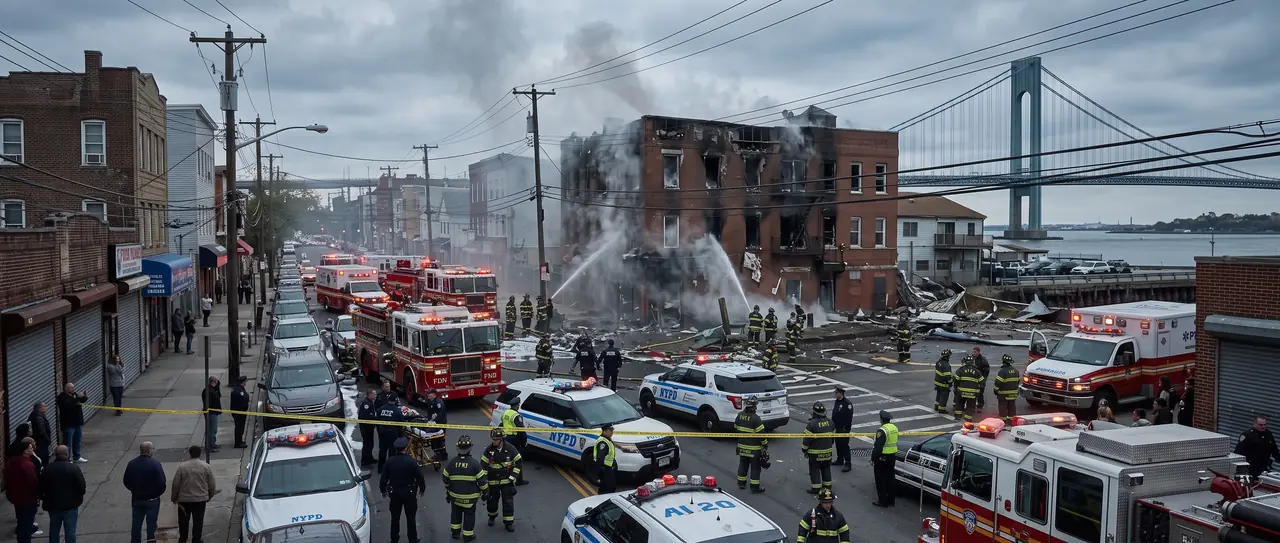
The May 2026 shipyard fire and explosion on Richmond Terrace is the kind of industrial burn event that generates these claims. When a blast or blaze injures workers and bystanders, the question is not only what caught fire but who was supposed to prevent it and failed. Answering that question is how you prove liability, and it usually takes fire marshal reports, equipment records, and inspection history that a lawyer can subpoena before they disappear.
If your burn came from anyone’s failure to do what safety required, a Staten Island burn injury lawyer can tell you in one free call whether the facts support a claim.
Types of Burns and Fire Injuries We Handle
Burns are graded by depth, and the grade drives both your treatment and the value of your case:
- Thermal burns from flames, steam, or hot surfaces — the most common fire injury.
- Chemical burns from acids, solvents, or industrial cleaners that keep damaging tissue until the substance is neutralized.
- Electrical burns that scorch the skin at the contact point while injuring muscle and nerve deep inside, often far worse than the surface suggests.
- Scald burns from hot liquids, a frequent injury in apartment and restaurant kitchens.
- Smoke inhalation, which burns the airway and lungs even when the skin is untouched.
Depth is measured in degrees. First-degree burns stay in the top layer of skin. Second-degree burns blister. Third-degree burns destroy the full thickness of skin and often need grafts. Fourth-degree burns reach muscle and bone.
Smoke inhalation is the injury people underrate. Lung damage can surface a day or two after the fire, so a person who walked away feeling fine ends up hospitalized. Get examined the same week even if you have no visible burns.
The burns that change a life are the ones that leave permanent scarring or disfigurement. Those injuries carry weight both medically and legally, because significant disfigurement is a category New York law treats seriously.
Burns From a Car Fire or Crash
If your burns came from a crash or a car fire on Staten Island, no-fault insurance is the first thing to move. Your own auto policy pays medical bills and lost wages under no-fault, but you have to file the application within 30 days of the crash. Miss that window and you can lose the benefit.
No-fault also caps what you can sue for — unless your injury clears the serious-injury threshold in Insurance Law 5102(d). Significant disfigurement is one of the listed categories, and burn scarring frequently meets it. Once your injury qualifies, you can step outside no-fault and sue the at-fault driver or manufacturer for the full harm, including pain and the disfigurement itself. A burn that scars is often the clearest path over that threshold.
Who Is Liable for a Staten Island Burn Injury
Liability turns on who controlled the hazard, and burn cases usually fall into three groups.
Premises liability covers fires caused by a property owner’s neglect. A private landlord who let electrical code violations pile up, or the New York City Housing Authority failing to fix known wiring and detector problems in one of its Staten Island developments, can be sued for the resulting fire. NYCHA is a public agency, which changes your deadlines in ways covered below, but it does not shield the authority from responsibility for a dangerous building.
Construction burns run on the Labor Law. Section 200 states the general duty to keep a work site safe. Section 241(6) ties liability to specific Industrial Code violations, which matters for burns from unguarded equipment, exposed wiring, or flammable material left where welders work. Section 240 reaches burns connected to elevation and falling hazards. On a Staten Island job site, these statutes often let an injured worker recover from a general contractor or owner even when a subcontractor lit the spark.
Defective products bring strict liability, which is friendlier to you than ordinary negligence — you do not have to prove the maker was careless, only that the product was defective and caused your burn. Faulty wiring in a building or appliance is one common source. Lithium-ion battery fires are the fast-growing one: e-bike and scooter batteries that overheat and ignite have caused serious burns across the city, and the manufacturer, distributor, and sometimes the seller can each be liable.
Many burn cases have more than one responsible party. Identifying all of them is what protects your recovery if one defendant turns out to be uninsured.
Compensation You Can Recover
A burn claim has to account for costs that stretch years past the fire. New York law lets you recover:
- Medical care already provided — emergency treatment, hospitalization, and the burn-center stay itself.
- Future surgery, including the skin-graft and reconstructive procedures many serious burns require long after the wound closes.
- Lost earnings for the time you could not work.
- Diminished earning capacity when the injury keeps you from returning to the same job or the same hours.
- Pain and suffering, including the physical pain of burn recovery, which is among the most severe in medicine.
- Disfigurement, valued as its own harm when scarring is permanent and visible.
The hard part of a burn case is proving the long-term numbers. A third-degree burn may need revision surgeries a decade out, and physical therapy or psychological treatment for scarring that never fully fades. We build that future cost with treating physicians and burn specialists who can put a medical basis under every dollar claimed, so the figure is documented rather than guessed. Insurers discount future care aggressively when it is only estimated. A claim grounded in a surgeon’s treatment plan is much harder to cut.
We do not publish case results, and no lawyer can promise a number. What we can do is make sure the claim reflects the full arc of your recovery, not just the bills already in hand.
What to Do After a Burn Injury in Staten Island
Get to a burn specialist first. Staten Island has two strong options. The Finkelstein Regional Burn Center at Staten Island University Hospital, 475 Seaview Avenue, is the borough’s dedicated burn unit and treats the full range of severity. Richmond University Medical Center at 355 Bard Avenue is a Level I trauma center equipped for the multi-system injuries that come with explosions and severe fires. Either one creates the medical record your claim will rest on.
Once you are stable, evidence starts to matter. Fire scenes get cleared, and physical proof vanishes within days.
- Photograph everything — the burn injuries, the scene, the appliance or vehicle involved, and any warning labels still legible.
- Keep the object that burned you. A failed charger, heater, or battery is the core of a product claim and should not be thrown out or repaired.
- Get the FDNY fire report and, in a work injury, any incident report the employer filed.
- Write down names and numbers of witnesses before they scatter.
- Do not give a recorded statement to any insurer before you have talked to a lawyer. Adjusters call fast, and early statements get used to shrink your claim.
If you are still admitted and cannot handle any of this, a lawyer from our office will come to the burn center and start the evidence work for you.
Deadlines to File Your Staten Island Burn Claim
Your case runs on more than one clock, and the shortest one controls.
For a personal injury burn claim, CPLR 214 gives you three years from the date of the fire to file suit. That is the deadline most people think of, and it is real, but it is not the only one.
If a family member died in the fire, EPTL 5-4.1 sets a separate two-year deadline for the wrongful-death claim, measured from the date of death.
The trap is a government defendant. If NYCHA or a city agency is responsible for the fire, GML 50-e requires a Notice of Claim within 90 days of the injury — long before the three-year window closes. Miss that filing and the underlying claim can be barred no matter how strong it is. Fires in public housing and city-owned buildings are exactly where this shorter clock hides.
Burn suits in the borough are filed in Richmond County Supreme Court at 26 Central Avenue in St. George. Getting your case into that court on time is the whole point of moving early, and it is why the first call matters more than people realize.
What Hiring Our Burn Injury Lawyers Costs
Nothing up front. We take burn and fire cases on a contingency fee, which means you pay no hourly rate and no retainer to hire us. Our fee is a percentage of what we recover for you, and it comes out only if we win the case or settle it. If we recover nothing, you owe us no fee. The case review before any of that is free.
This is the arrangement that lets an injured Staten Island resident hire a serious burn injury lawyer while out of work and buried in medical bills. You are not gambling money you do not have. The firm carries the cost of investigating the fire, hiring the medical and fire experts, and taking the case to trial if the insurer will not deal fairly, and we are only repaid out of a recovery. Your financial risk in bringing the claim is zero.
Why Staten Island Burn Victims Choose Silver Law Group
We answer the phone at any hour, because fires do not keep business hours and neither do burn injuries. Consultations are free and available in English, Spanish, and Russian, so you can explain what happened in your own language.
If you are admitted to Finkelstein or RUMC, or recovering at home, the attorney comes to you rather than making you travel while you are healing. That is how the case starts when you cannot start it yourself.
We prepare every burn case as if it is going to trial. Insurers track which firms are ready to try a case and which only settle, and that posture shapes what they offer long before a courtroom is involved. Preparing for trial from day one is what keeps your claim from being lowballed.
Call 212-470-4544 now. A Staten Island burn injury lawyer will take your case, protect your deadlines, and start the work today.