

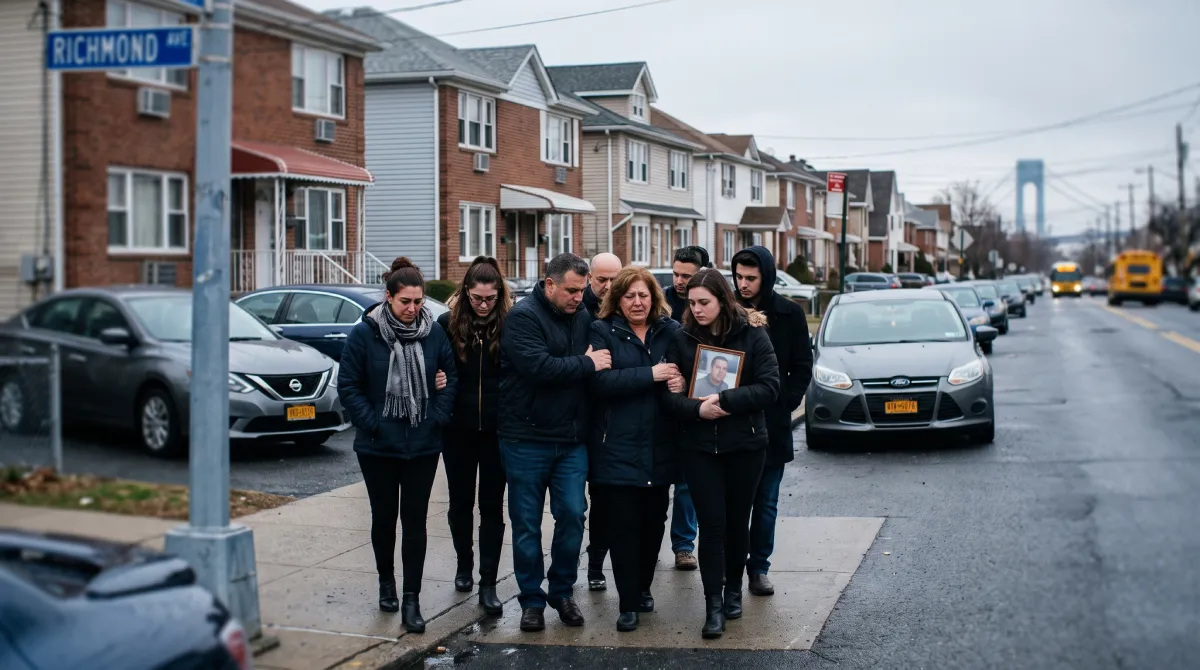
A Staten Island wrongful death lawyer exists for one reason: when someone else’s negligence kills a member of your family, New York law hands you a narrow window and a fixed set of rights, and both are easy to lose without help. Silver Law Group handles these claims under EPTL 5-4.1, the state’s wrongful death statute, which gives you two years from the date of death to sue. You are grieving, and an insurance adjuster is probably already calling. The consultation is free, and it happens in English, Spanish, or Russian — whichever language your family speaks at home. If you cannot come to our Midtown Manhattan office, an attorney will come to your home or the hospital. Call 212-470-4544.
Do You Have a Staten Island Wrongful Death Case?
Three things have to be true before New York recognizes a wrongful death claim, and all three come from EPTL 5-4.1. First, someone acted wrongfully — through negligence, a careless act, or a deliberate one — in a way the deceased could have sued over if they had lived. A drunk driver on Hylan Boulevard, a property owner who ignored a known hazard, a doctor who missed a treatable condition: each is wrongful conduct when it breaches a duty owed to the person who died.
Second, that conduct has to have caused the death. Not just an injury, and not a death that would have happened anyway. The wrongful act must be a direct link in the chain that ended the life.
Third, the person who died has to leave behind distributees who suffered a pecuniary loss. Pecuniary means financial. New York does not pay a family for its grief in a wrongful death claim; it pays for the money and support the death took away. A spouse who lost a wage earner, children who lost a parent’s income and guidance — those are the losses the statute counts.
Comparative fault does not end your claim. Under CPLR 1411, if the person who died was partly responsible — speeding when another driver ran the light — a court reduces the recovery by their share of fault but cannot bar it. A finding that your family member was 30 percent at fault cuts the award by 30 percent; it does not send you home with nothing. Insurers lean hard on comparative fault because it is their cheapest defense, and it is rarely as clean as they claim.
Fatal Accidents We Handle Across Staten Island
The cause of a death decides how its claim is built — which statute applies, who the defendant turns out to be, and how short the deadline runs. On Staten Island, fatal negligence tends to cluster in a handful of settings, and the setting is the first thing we look at.
Highway crashes are the largest category. The borough’s expressways move traffic at speeds that turn a single mistake fatal, and its surface roads mix heavy commuter volume with people on foot.
Maritime and waterfront deaths are particular to Staten Island in a way they are not to most of the city. The borough’s industrial shoreline carries commercial vessel traffic, and a death on the water can pull federal maritime law into what looks at first like an ordinary accident case.
Construction and workplace deaths follow the borough’s building activity, and New York’s Labor Law gives the families of fallen workers rights that ordinary negligence does not.
Medical deaths — a missed diagnosis, a surgical error, a delayed response — are their own category, governed by malpractice rules and a different clock.
Motor Vehicle and Pedestrian Fatalities
Speed is the constant on Staten Island’s worst roads. The Staten Island Expressway (I-278) funnels the island’s east-west traffic through a corridor where a rear-end collision at highway speed leaves little chance of survival. The West Shore Expressway (Route 440) carries the same risk on the borough’s western edge, often with fewer witnesses when a crash happens late at night.
Surface roads kill differently. Hylan Boulevard runs for miles as a wide, fast arterial lined with driveways, bus stops, and crosswalks, which puts pedestrians directly in the path of drivers moving faster than the setting allows. Richmond Avenue carries the same mix through the borough’s commercial center. A person crossing to a bus stop has no protection when a driver runs a light or misjudges a turn.
Three causes drive most of these deaths. A drunk driver — legally impaired above the 0.08 limit — reacts too slowly to stop in time. A speeding driver turns a survivable impact into a fatal one, because the energy in a crash climbs with the square of the speed. And a driver who never sees the pedestrian, often on a dark stretch of road, strikes at full force.
A fatal crash claim starts with the police work: the NYPD accident report, the scene photos, and any camera that caught the moment.
Construction, Workplace, and Premises Deaths
New York gives construction workers’ families a tool most accident victims never get. Labor Law 240 — the Scaffold Law — makes property owners and general contractors strictly liable when a worker dies in a fall from height that proper safety equipment would have prevented. Labor Law 241 extends similar protection to deaths caused by unsafe conditions across a construction site. Strict liability matters because it takes the defendant’s excuses off the table: if the fall protection was missing and a worker died, the owner answers for it.
The May 2026 waterfront explosion in Mariners Harbor is the kind of industrial event these statutes and ordinary negligence law both reach, depending on who controlled the site and what caused the blast. A death from an explosion, a collapse, or a fall almost always involves more than one responsible company, and identifying each one early changes what a family can recover.
Premises deaths happen off the job too — a fatal fall on a negligently maintained stairway, a fire in a building with blocked exits.
Many Staten Island trauma victims are taken to Staten Island University Hospital at 475 Seaview Avenue, and the records created there become central evidence. The timeline of care, the injuries documented on arrival, and the cause of death stated by the treating physicians all shape the claim.
Who Can File and Who Receives Compensation
Only one person can file a New York wrongful death claim: the personal representative of the estate. Not the grieving spouse in their own name, not the children directly — the representative sues on behalf of everyone entitled to recover. That entitlement runs through EPTL 4-1.1, the same statute that governs who inherits when someone dies without a will, and it follows a fixed order:
- A surviving spouse and children share the recovery. If there are children, the spouse does not take everything.
- Children alone recover when there is no surviving spouse.
- Parents recover when the person who died left no spouse and no children.
- More distant relatives recover only when none of the closer classes exist.
The gap between who files and who benefits trips up many families. The personal representative — often a spouse or adult child — is the named plaintiff, but the money is distributed among the distributees according to their actual pecuniary losses, which a court apportions at the end of the case.
Before any of this can happen, the estate has to be opened. The Richmond County Surrogate’s Court at 18 Richmond Terrace appoints the personal representative and issues the legal authority to act for the estate. Without that appointment, no one has standing to file, and the two-year clock keeps running while the paperwork sits. That is why opening the estate early matters as much as investigating the accident. We handle the Surrogate’s Court petition as part of the case, so the appointment and the lawsuit move together instead of one waiting on the other.
What a Staten Island Wrongful Death Claim Is Worth
New York measures a wrongful death claim by what the family lost in dollars, not by what it lost in a person. That single rule explains most of what follows. The recovery is pecuniary — financial — and it is built from specific, provable categories.
Lost financial support is usually the largest. If the person who died earned income the family depended on, the claim accounts for the wages and benefits they would have provided over their working life, minus what they would have spent on themselves. A stay-at-home parent’s contribution counts too, measured by the replacement cost of the childcare, cooking, and household work they performed.
Lost parental guidance is a recognized category for children who lose a parent. New York treats the guidance and moral instruction a parent provides as a pecuniary loss to a minor child, even though its value resists a clean number.
Funeral and burial costs are recoverable, as are the final medical bills — the ambulance, the emergency care, the last hospital stay before death.
What New York still refuses to pay for is grief. The family’s emotional suffering, the loss of the person’s companionship and love, the anguish of the death itself — none of it is compensable in a wrongful death claim. The Grieving Families Act would have changed that by letting families recover for emotional loss, and it cleared the Legislature more than once, but it was vetoed a fourth time in December 2025. Until a version becomes law, the line holds: New York compensates the paycheck, not the person.
Because value turns on these provable categories, no honest lawyer can quote you a number early. The support a 40-year-old earner would have provided differs entirely from an elderly retiree’s, and the claim is worth what the evidence of loss can prove.
Wrongful Death vs. Survival Action
A fatal accident often produces two separate claims, and confusing them costs families money. The wrongful death claim compensates the survivors for their financial loss. A survival action, brought under EPTL 11-3.2, compensates the estate for what the person who died went through before dying.
The survival action’s core is conscious pain and suffering. If your family member was aware after the injury — burned in the Mariners Harbor blast and conscious for minutes before death, or trapped and alert after a highway crash — the law recognizes that suffering as a loss the estate can recover for. The measure is the fear and physical pain the person actually felt, which is why the medical record of those final minutes matters so much.
Punitive damages can enter through EPTL 5-4.3 when the conduct went past ordinary carelessness into recklessness — a driver three times over the limit, a contractor who stripped out guardrails to save time. These punish and deter rather than compensate, and they are not available in every case.
Filed together, the two claims cover both what the family lost and what the person endured. Leaving the survival action out forfeits real money.
Steps to Take After a Fatal Accident in Staten Island
Evidence disappears fast after a fatal accident, and the days right after the death are when a family has the least energy to protect it. A short, ordered list helps.
- Get the police and NYPD reports. Every fatal crash generates an accident report, and serious cases draw a more detailed investigation. These fix the official account of what happened and name the parties and witnesses.
- Secure surveillance and vehicle evidence before it is gone. Footage from nearby businesses is often overwritten within days. The vehicles carry physical evidence — crush damage, black-box data — that a repair or a scrapyard can erase.
- Obtain the complete medical records. The records from Staten Island University Hospital or wherever your family member was treated document the injuries, the care, and the cause of death a claim depends on.
- Say nothing to the other side’s insurer. An adjuster may call within days, sounding sympathetic. Anything you say can be used to argue your family member was at fault or that the death was less severe than it was. Do not give a recorded statement.
- Open the estate. The lawsuit cannot be filed until the Surrogate’s Court appoints a personal representative, so start that process early rather than after the investigation.
You do not have to do these alone. When we take a case, the investigation and the Surrogate’s Court filing start at the same time, before evidence has a chance to vanish.
What It Costs to Hire Our Firm
Hiring us costs nothing up front, and it costs nothing at all unless we win. That is the contingency fee, and here is exactly how it works. You pay no hourly rate and no retainer. Our fee is a percentage of the money we recover for your family, and we collect it only if we recover something. If the case does not succeed, you owe us no attorney’s fee.
Litigation costs work the same way. A wrongful death case runs up real expenses — expert witnesses to reconstruct the crash, medical experts to explain the injuries, court filing fees, deposition transcripts. We advance those costs as the case moves, so nothing comes out of your pocket while the claim is pending. They are repaid from the recovery at the end, alongside the fee.
The point of this structure is plain: a grieving family should not have to choose between paying rent and hiring a lawyer. The consultation that starts it all is free and carries no obligation to hire us. You learn where you stand at no cost and no risk.
Deadlines That Can End Your Claim
You have two years from the date of death to file a wrongful death lawsuit in New York. That is EPTL 5-4.1’s deadline, and it is shorter than the three-year window that applies to injury cases where the victim survives. The clock runs from the death, not from the accident, which matters when someone lives for weeks or months after the injury before dying.
A second, much shorter deadline applies when a government entity is involved. If the death came from an MTA bus, a city sanitation truck, a police vehicle, or any municipal actor, General Municipal Law 50-e requires a formal Notice of Claim within 90 days of the death. Miss that 90-day notice and you can lose the right to sue the government body entirely, no matter how strong the case. Because Staten Island’s bus network and city fleet put public vehicles on the road every day, this deadline catches more families than they expect.
The two deadlines run at the same time, not one after the other. A death caused by a city bus triggers both the 90-day notice and the two-year filing deadline, and the notice comes first by a wide margin.
A Staten Island wrongful death lawsuit is filed in the Richmond County Supreme Court at 26 Central Avenue, the trial court for the borough. Filing in the right venue and serving the right parties within the deadline is the difference between a case that proceeds and one a judge dismisses before anyone hears the facts. The safest move is to talk to a lawyer while all of these clocks still have time on them.
Why Grieving Staten Island Families Choose Silver Law Group
Grief does not keep business hours, and neither do we. You can reach Silver Law Group any hour of the day or night, because a fatal accident does not wait for Monday morning and neither should the family trying to understand their rights.
We handle your case in the language your family actually speaks. The consultation and the representation happen in English, Spanish, or Russian, so nothing about your loss gets filtered through a relative acting as interpreter.
We prepare every case as if it will be tried. Insurers settle for less when they sense a lawyer will not take them to court, so we build each wrongful death claim for a jury from the start. Most cases still resolve without trial, but they resolve on better terms when the other side knows we are ready.
If you cannot come to our Midtown Manhattan office, an attorney comes to you — to your home on Staten Island or to the hospital where your family member is being treated. You should not have to arrange travel while you are planning a funeral.
Everything starts with a free consultation, and there is no fee unless we recover for your family. Call a Staten Island wrongful death lawyer at Silver Law Group at 212-470-4544, and we will tell you honestly whether you have a claim and what the next step is.