

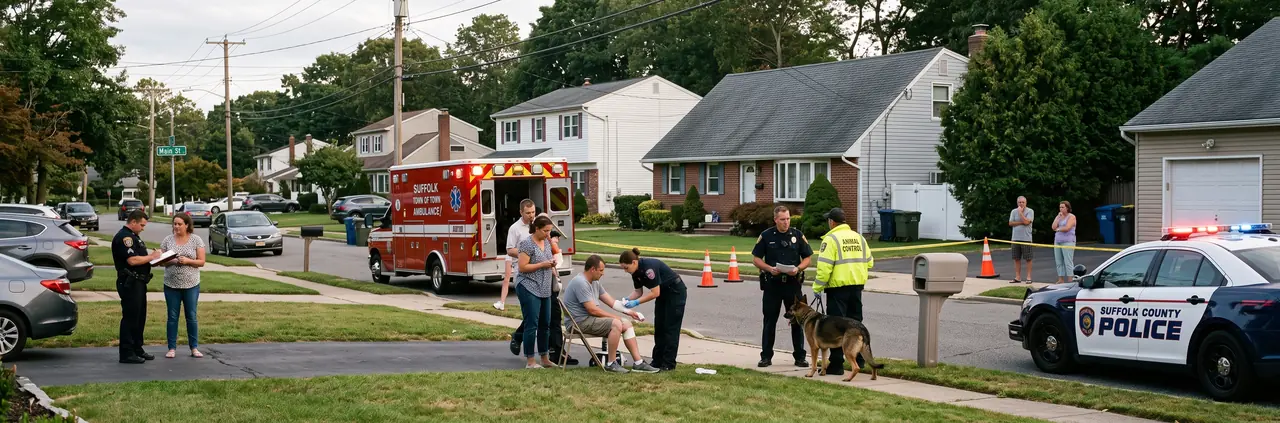
A dog attack in Suffolk County can leave you with puncture wounds, mounting medical bills, and an insurance adjuster calling before you have left the emergency room. A Suffolk County dog bite attorney at Silver Law Group can take that pressure off you, starting with a free consultation available 24 hours a day in English, Spanish, and Russian. We represent bite victims across Brookhaven, Islip, Huntington, Smithtown, and Babylon, and if your injuries keep you home or in a hospital bed, the attorney comes to you. The call costs nothing and commits you to nothing; you can file now or simply find out where you stand.
Do You Have a Dog Bite Case in Suffolk County?
For most of the last two decades, New York gave dog bite victims one narrow path: you could win only by proving the owner already knew the dog was dangerous. The Court of Appeals changed that in Flanders v. Goodfellow (2025). You now have two ways to hold a Suffolk County dog owner responsible, and you can use both in the same case.
The first is strict liability. If the owner knew or should have known the dog had vicious propensities — a tendency to bite, lunge, or attack — the owner pays for the harm the dog causes. You do not have to prove carelessness. The prior knowledge is enough on its own.
The second path is ordinary negligence, and it is what Flanders opened up. You can now argue that the owner simply failed to act as a reasonable person would: left a gate unlatched, dropped the leash, let a large dog loose near a playground, even if that dog had never bitten anyone before. Before 2025, a first bite often meant no case at all. Now the absence of a prior bite does not end the inquiry — it shifts it to what the owner did or failed to do.
That distinction matters in Suffolk County, where a dog with no bite history can still put a child in Stony Brook’s ER. Strict liability targets the owner who knew the risk and kept the dog anyway; negligence reaches the owner who created the risk through plain carelessness. A dog bite lawyer builds both theories from the same set of facts and lets the evidence decide which one carries the claim.
Proving the Dog Owner Is Liable
Strict liability turns on one question: did the owner know the dog was dangerous? Propensity evidence answers it. The more of the following your attorney can document, the harder it is for the owner to claim surprise:
- Prior bites or attacks on other people or animals
- Growling, snapping, or lunging at people who came near
- A muzzle the owner used in public — an admission the dog needed one
- A “Beware of Dog” sign, which tells a jury the owner expected trouble
- Neighbor complaints, prior animal control calls, or warnings the owner ignored
Negligence evidence runs on a separate track. Here the question is not what the owner knew about the dog but what the owner did with it: an unlatched gate, a leash-law violation, a dog tied with frayed rope near a sidewalk, a door left open with children nearby. Photographs, witness statements, and animal control records taken soon after the attack lock these facts in place before memories fade or a fence gets repaired. The sooner a lawyer starts collecting them, the more of your case survives to trial.
Dog Bite Injuries and Emergency Treatment
A dog bite does more damage than the skin shows. A tooth that leaves what looks like a small puncture can drive bacteria deep into tissue, which is why infection is the most common serious complication. Deep bites also tear nerves, and that can leave a hand or a lip numb or weak long after the wound closes.
The injuries that shape a claim are the ones that do not heal cleanly:
- Puncture and crush wounds from a strong jaw
- Infection, including rabies exposure that forces a course of post-exposure shots
- Nerve damage causing lasting numbness or loss of function
- Permanent scarring and disfigurement, often on the face and hands
- Post-traumatic stress, nightmares, and a fear of dogs that outlasts the wounds
For a severe attack — a mauling, a facial injury, an arterial bleed — Stony Brook University Hospital is Suffolk County’s regional trauma center, and its records often become central to the case. Get treated the same day even if the bite looks minor, because the medical record created in that first visit is the timeline your claim is built on. Emotional injury counts too: PTSD after a dog attack is a recognized, compensable harm, not a footnote to the physical wounds.
When the Dog Bite Victim Is a Child
Children are bitten on the face and neck far more often than adults, simply because they are closer to a dog’s height, and a scar in those places can mean years of reconstructive surgery as the child grows. The stakes are higher, and so is the oversight.
When the victim is a minor, you cannot simply settle the claim and cash a check. A child’s settlement has to be approved by a judge through an infant compromise order in Suffolk County Supreme Court in Riverhead. The court reviews the amount to confirm it is fair, then directs that the money be held in trust, typically until the child turns 18, so it cannot be spent while they are still a minor.
Because a child’s scarring and emotional trauma can keep developing for years, the value of a child’s case often depends on medical opinion about future surgeries and lasting psychological effects. A rushed settlement can shortchange injuries that have not fully revealed themselves. A child’s dog bite claim is worth taking slowly and documenting fully.
What Your Suffolk County Dog Bite Claim Is Worth
What a dog bite claim is worth depends on the injury, not on a formula, and it is measured in categories of loss the law lets you recover. Your claim can include:
- Medical bills already paid and the cost of treatment still ahead
- Future reconstructive or plastic surgery to repair scarring
- Lost wages, plus reduced earning power if the injury limits the work you can do
- Pain and suffering for what the attack put you through
- Disfigurement, valued separately when scarring is permanent and visible
- Emotional distress, including PTSD documented by a provider
- Diminished quality of life — the activities and confidence the injury took
Two categories drive the value of most serious cases: permanent scarring and future medical need. A visible facial scar is treated as its own compensable harm because it does not go away, and a jury can weigh it directly. Future surgery is proven through a treating surgeon’s plan, which is one more reason building the medical record early matters so much.
No lawyer can promise a number, and any figure you are quoted before the treatment picture is clear is a guess. What a Suffolk County dog bite attorney can do is make sure every category above is documented and none is left on the table. The emotional injury, the future surgery, and the lost earning power are the losses victims most often undervalue on their own.
Who Pays for a Suffolk County Dog Bite
The money in a dog bite claim almost never comes out of the owner’s pocket. It comes from insurance. Most homeowners and renters policies include liability coverage that pays for injuries the household’s dog causes, commonly with limits between $100,000 and $300,000. That coverage, not the owner’s savings, is usually what a claim is paid from, which is why an owner with no assets can still be worth pursuing.
Renters are covered too, as long as they carry a renters policy, and the same liability section applies. The gap opens when the owner has no policy at all, and that is where a second target can matter.
A landlord can be on the hook when the dog belongs to a tenant. If the property owner knew a tenant kept a dangerous dog — through complaints, prior incidents, or plain observation — and let the animal stay, the landlord’s own insurance may share responsibility for an attack. This does not apply to every case; it turns on what the landlord knew and controlled. Finding every policy that might cover your injury is part of what an attorney does before making any demand, because a wrong assumption about coverage can leave money unclaimed.
What to Do After a Dog Bite in Suffolk County
The hours after a dog bite decide how strong your claim will be. Take these steps in order:
- Get medical care the same day. Even a small puncture can get infected, and the record from that visit is the foundation of your case.
- Identify the owner and the dog. Get the owner’s name, address, and whether the dog is vaccinated; a dog whose owner you cannot name is far harder to pursue.
- Photograph everything — your wounds before they are stitched, the location, the dog if you safely can, and any broken gate or dropped leash.
- Collect witness names and phone numbers. A neighbor who saw the attack, or who knew the dog was aggressive, can decide a close case.
- Say nothing recorded to the insurer. An adjuster may call within days and ask for a recorded statement; you are not required to give one, and early words taken out of context are used to cut your claim.
That last step is the one victims get wrong most often. The adjuster sounds helpful and moves fast, and a friendly recorded call before you have a lawyer rarely works in your favor. You can decline, take the adjuster’s information, and hand the conversation to your attorney.
Reporting Your Dog Bite in Suffolk County
Reporting the bite creates an official record your claim can lean on later. In Suffolk County, animal bites are reported to the Suffolk County Department of Health Services, which you can reach at 631-853-0333. The county also keeps an Animal Bites Registry run through the SPCA, which tracks incidents and can surface a dog’s history of aggression.
That report does two jobs. It triggers a rabies assessment that protects your health, and it puts the attack on the record with a date and description that protects your claim if the owner later denies the dog was involved.
Suffolk handles this differently than its neighbor. Nassau County runs a separate dangerous-dog registry under Benny’s Law, which flags animals already declared dangerous; Suffolk’s system centers on the health department and the SPCA registry instead. If your bite happened in Suffolk, report it through Suffolk’s channels. A report filed with the wrong county does nothing for your case and can cost you time you do not have.
Deadlines to File a Suffolk County Dog Bite Lawsuit
You do not get unlimited time to bring a dog bite claim, and the deadline is not flexible. Under CPLR 214, you have three years from the date of the bite to file a personal injury lawsuit in New York. Miss it, and the court will not hear your case no matter how badly you were hurt or how clearly the owner was at fault.
A different clock runs if the attack was fatal. When a dog bite causes death, EPTL 5-4.1 sets a two-year deadline for the family to bring a wrongful death claim, measured from the date of death. It is shorter than the injury deadline, and families dealing with a loss often do not realize it is already running.
Children get more time. Under CPLR 208, the three-year clock does not start for an injured child until they turn 18, so a family that missed the ordinary window for a young child’s bite may still have a viable claim. That toll is a legal protection, not automatic paperwork, and its limits are technical enough that you should have a lawyer confirm exactly how much time a child’s case has left rather than assume.
Three years feels far off until evidence starts disappearing. Witnesses move, the dog is rehomed, the gate gets fixed. Filing on time is the floor; building the case well means starting long before the deadline forces your hand.
What Hiring Our Dog Bite Lawyers Costs
Hiring a dog bite lawyer at Silver Law Group costs you nothing up front, and nothing at all unless we win. We work on a contingency fee, which means our fee is a percentage of the compensation we recover for you, and if we recover nothing, you owe us no legal fee. There is no hourly bill and no retainer to pay before we start.
The costs of building a case, like medical record requests, expert opinions, and filing fees, are advanced by the firm as the case goes rather than billed to you along the way. Those costs are repaid only out of a recovery, so the firm carries the financial risk of pursuing your claim, not you. If there is no recovery, you are not chasing us for expenses either.
This is the whole point of contingency: it lets someone with medical bills and lost income hire a trial-ready lawyer without finding money they do not have. The free consultation is the first step, and it commits you to nothing.
Why Suffolk County Dog Bite Victims Call Silver Law Group
If your injuries keep you home or in a hospital bed, you do not have to come to us. Our attorneys travel to homes and hospitals across Suffolk County — Brookhaven, Islip, Huntington, and beyond — so you can start your case from a couch or a bedside instead of a waiting room. The first consultation is free, available 24 hours a day, and offered in English, Spanish, and Russian.
We prepare every dog bite case as if it will be tried. When a Suffolk County claim cannot be settled fairly, it is litigated in the Supreme Court in Riverhead, and a case built for trial from day one is one an insurer takes seriously long before it gets there. That posture is what moves adjusters who assume an injured person will grab the first low offer.
Our office is at 49 West 37th Street in Midtown Manhattan, and we represent Suffolk County bite victims from there while coming to you when you cannot travel. If a dog has hurt you or your child anywhere in Suffolk County, call 212-470-4544. The consultation is free, the call is confidential, and there is no fee unless we recover for you.