

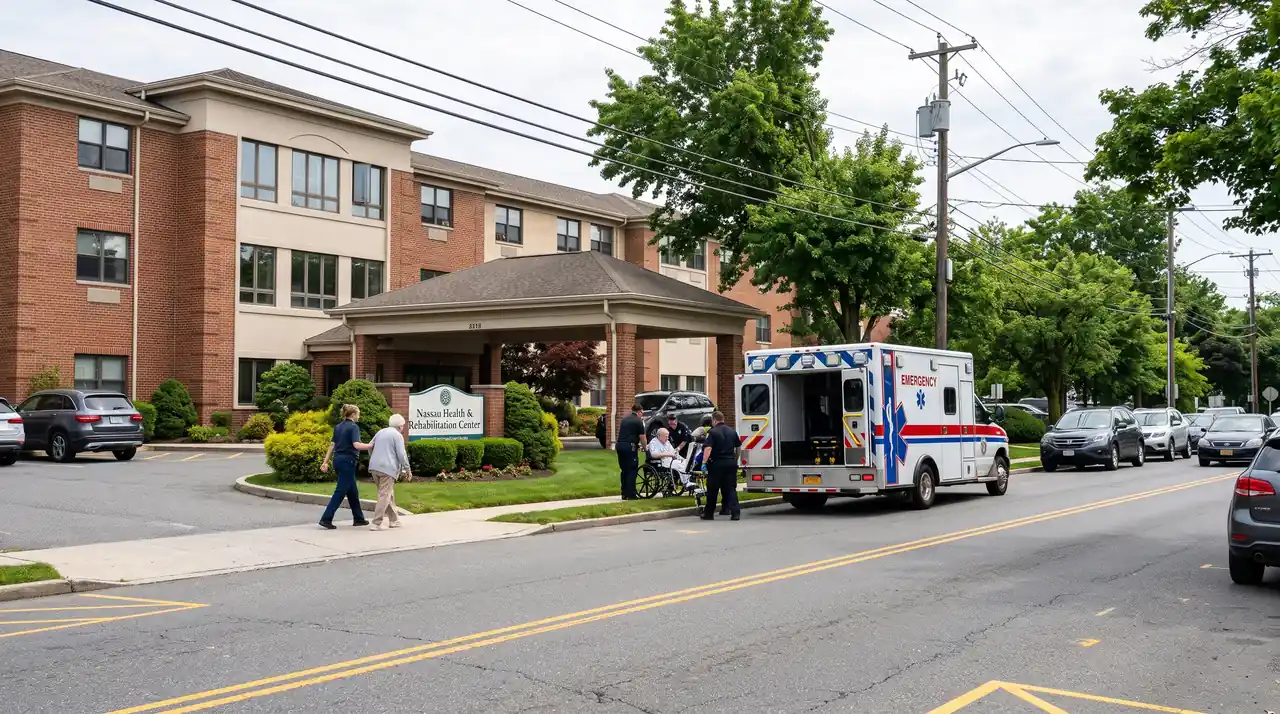
If your parent came back from a nursing home with a deep bedsore, a broken hip or bruises no one can explain, a Nassau nursing home negligence attorney can start preserving evidence this week. Silver Law Group represents residents and families across the Town of Hempstead, Oyster Bay, North Hempstead, Glen Cove and Long Beach. The first conversation is free, and you can have it in English, Spanish or Russian. Call 212-470-4544 and tell us what you saw at the facility. An attorney will tell you which deadlines apply to your case and which records to request before the facility has a chance to tidy its chart.
Signs of Nursing Home Neglect in Nassau County
Each injury below points to a duty the facility skipped. Every New York nursing home must assess each resident, write a care plan and follow it. The harm usually appears where that plan was ignored.
- Pressure ulcers (bedsores). A resident who cannot shift position alone has to be turned on a schedule and checked for skin breakdown. A stage 3 or 4 wound means turning, nutrition or wound care stopped long enough for tissue to die.
- Unwitnessed falls. A resident rated as a fall risk should have bed alarms, a low bed or an aide walking them to the bathroom. When nobody saw the fall, it often means nobody was assigned to watch.
- Dehydration, which shows up as confusion, dark urine, sudden weight loss and repeat hospital trips. Staff must offer fluids and help residents who cannot drink on their own.
- Sepsis. Infections from wounds, catheters or urinary tract infections become life-threatening when staff miss a fever or a change in alertness and wait too long to send the resident to a hospital.
- Choking on food the diet order said the resident should never get, such as regular textures for someone who needs puréed meals and supervised feeding.
- Medication errors: missed doses, double doses, the wrong resident’s pills.
- Unexplained bruises or fractures, especially on the wrists, upper arms or inner thighs. These can mean rough handling during transfers, or abuse staff never reported.
- Psychotropic sedation. Antipsychotics and sedatives given to keep a resident quiet rather than to treat a diagnosed condition count as a chemical restraint. Federal nursing home rules forbid using them for staff convenience.
- Wheelchair restraints. Belts, lap trays or tied positions used without a medical reason are physical restraints. They cause falls, sores and muscle loss.
Photograph what you see and write down the date. The chart will give the facility’s version of events. Your photos give yours.
Understaffing and New York’s Minimum Staffing Law
Public Health Law 2895-b sets a legal floor for staffing. Each resident must get an average of 3.5 hours of direct care per day. At least 2.2 of those hours must come from certified nurse aides and at least 1.1 hours from licensed nurses, meaning RNs and LPNs. These figures matter because most of the injuries listed above come down to time. One aide covering a full hallway on the night shift cannot turn, toilet and feed every resident who depends on her.
Unanswered call bells are some of the best evidence of understaffing. If your parent says they pressed the bell and nobody came, write down the day, the time and how long they waited. Roommates and visiting relatives often saw the same thing. We match those accounts against the staffing schedules, time records and staffing data the facility reports to regulators. Together they can show the home ran below the 2895-b minimum on the day your parent was hurt.
Elder Abuse Lawyer for Physical, Sexual and Financial Abuse
Neglect is a failure to act. Abuse is a deliberate act against the resident. It covers hitting, shoving, sexual contact, threats, and taking a resident’s money or pressuring them to sign over property. The difference changes the case. Abuse can bring criminal charges against the staff member, and it opens the facility to claims that it hired, screened or supervised that person carelessly.
In 2025, the New York Attorney General’s office won a felony conviction against an aide at a Nassau County nursing home who had sexually assaulted residents. The charge was endangering the welfare of a vulnerable elderly person, a class E felony. Prosecutors punish the abuser. They do not pay for your parent’s treatment or hold the facility responsible for letting it happen. A civil claim does both of those things.
Silver Law Group acts as an elder abuse lawyer in New York for families who suspect abuse. We pull the facility’s background checks, prior complaints against the aide and incident reports to find out what management knew and when.
Nassau Nursing Homes Accused of Neglect
Two Nassau facilities have faced state enforcement actions over care and money. These are allegations and settlements brought by the state, not findings about every home in the county, but they show what understaffing looks like on paper.
- Fulton Commons Care Center, East Meadow. The Attorney General alleged that at times one or two aides were assigned to roughly 30 residents. That ratio leaves no realistic way to turn, feed and toilet everyone. The operators settled the state’s case in March 2024.
- Cold Spring Hills Center for Nursing and Rehabilitation, Woodbury. In 2022, the Attorney General sued the owners, alleging they diverted Medicaid and Medicare funds to themselves and related companies while residents went without adequate staff and supplies.
If your parent lived at either facility during the periods the state described, the public filings can support your own claim. They document conditions your family may only have glimpsed during visits. For any other Nassau home, look up its inspection history on Medicare’s Care Compare site and the New York State Department of Health’s nursing home profiles before you decide whether to keep your parent there.
Your Loved One’s Rights Under Public Health Law 2801-d
Public Health Law 2801-d lets a resident sue when a nursing home violates a right granted by statute, regulation or the admission contract, and the resident is injured as a result. Any nursing home negligence attorney in New York builds the case around this statute because it gives families advantages an ordinary negligence claim does not.
- The claim can be brought by the resident, by a legal representative such as a court-appointed guardian, or by the estate if the resident has died.
- Damages have a floor. Recovery cannot be less than 25% of the facility’s daily per-patient rate for each day the resident suffered the injury. A bedsore that went untreated for weeks therefore carries weight even before pain and suffering is counted.
- Punitive damages are available when the violation was willful or showed reckless disregard for the resident’s rights.
- The court may order the facility to pay your attorney fees.
- Any waiver of these rights is void, even one buried in admission paperwork your parent signed.
A 2801-d claim runs alongside negligence and malpractice claims, so you do not have to pick one theory and drop the others.
Who Is Liable for Nursing Home Neglect
The name on the sign is often not the only party who decided how many aides worked your parent’s floor. A Nassau case can reach:
- the licensed operator that runs the facility day to day
- the owners and investors behind it
- outside management companies that set budgets and staffing levels
- related-party companies, such as a landlord owned by the same people, that collect rent from the facility
- staffing agencies that sent untrained or unscreened workers
- attending physicians who missed an infection, a fracture or a dangerous drug order
Diverted money is how hidden owners get tied to bedside injuries. Medicaid pays most nursing home bills. When owners route those payments to companies they control, through inflated rent or management fees, less money is left for aides. The Cold Spring Hills lawsuit described that pattern. Following the money through cost reports and corporate filings shows who made the choice to understaff, and it brings those people into the case.
What a Nassau Nursing Home Neglect Claim Is Worth
No honest attorney can price your case on the first call. What we can do is identify every category of loss and build proof for each one.
- Medical bills for wound care, surgery, hospital stays and rehabilitation caused by the neglect
- The cost of moving your parent to a safer facility or arranging care at home
- Pain and suffering, including fear, humiliation and the loss of the ability to walk or eat independently
- Wrongful death recovery for the family’s financial losses and funeral costs, plus a separate claim for the pain your parent felt before death
Three factors move value more than anything else. The first is severity. A stage 4 sacral wound that exposed bone, or a hip fracture that ended your parent’s ability to walk, weighs far more than a bruise. The second is duration. A wound documented for six weeks without a change in the treatment plan shows sustained neglect, and under 2801-d each day of injury counts. The third is the facility’s conduct. Altered charts, unreported falls and staffing below the legal minimum all push a case toward punitive damages, and insurers know a Nassau jury will hear about them.
What Happens After You Call Our Nassau Nursing Home Negligence Attorney
The first week decides how much evidence survives. Here is what happens after you call 212-470-4544.
- We walk you through photographing every injury. Shoot each wound with a date visible and a coin beside it for scale, and keep photographing as it changes.
- We send a written demand for your parent’s full chart, care plan, medication records and incident reports. The same letter tells the facility to preserve call-bell logs, staffing sheets and video.
- We pull the transfer records from Nassau University Medical Center in East Meadow, where many Nassau residents are taken from their facilities. The emergency room notes record the wound stage, hydration level and fractures as an outside doctor found them, which the nursing home cannot rewrite.
- We help you file a complaint with the New York State Department of Health at 1-888-201-4563. A state inspection creates an independent record of what investigators found.
- When the evidence supports it, we file suit in Nassau County Supreme Court in Mineola. That starts discovery, including depositions of the aides, nurses and administrators who were on duty.
Signed an Arbitration Agreement at Admission?
Many families signed an arbitration agreement in a stack of admission forms without knowing it. That agreement would move the case out of court and away from a jury. Federal rule 42 CFR 483.70(n) limits what facilities can do with these agreements. A nursing home cannot make signing one a condition of admission or of continued care. The resident or their representative also has 30 days after signing to rescind it. Even an agreement that was never rescinded can fail if it was not explained properly or was signed by someone without authority. Bring every page of the admission packet to your consultation so an attorney can review it before the facility tries to enforce it.
What a Nassau Nursing Home Case Costs Your Family
Silver Law Group handles nursing home cases on a contingency fee, which means you pay no fee unless you recover. You pay nothing upfront, whether to start the case, request records or file in Mineola. If the case ends in a settlement or a verdict, our fee is a percentage of that recovery, set in a written agreement you sign before any work begins. If there is no recovery, you owe no fee. Your family’s savings stay with your family, even when your parent’s care costs are already draining them.
Deadlines for Nassau Nursing Home Negligence Claims
New York runs several clocks at once, and the shortest one controls.
- CPLR 214 gives you 3 years to sue for negligence and for violations of Public Health Law 2801-d.
- CPLR 214-a gives you 2.5 years for medical malpractice, such as a physician’s failure to diagnose an infection or order the right treatment.
- EPTL 5-4.1 gives the estate 2 years from the date of death to bring a wrongful death claim.
- A. Holly Patterson Extended Care Facility in Uniondale is run by the Nassau Health Care Corporation, a public entity. For claims against it, General Municipal Law 50-e requires a Notice of Claim within 90 days, and General Municipal Law 50-i requires the lawsuit to be filed within 1 year and 90 days.
Families at A. Holly Patterson often learn about the 90-day notice after it has already passed. Miss it and your parent can lose the claim entirely, no matter how strong the evidence.
These clocks usually run from the date of injury. A bedsore develops over weeks, so pinning down that date from the chart is part of our job. Call before you assume you have time.
Why Nassau Families Choose Silver Law Group
Families call us because of how the work gets done.
- Lines are answered 24/7, including the night your parent is rushed to the emergency room.
- An attorney comes to you, at your home in Hempstead or Glen Cove, at your parent’s bedside at NUMC, or at the facility itself.
- Every case is prepared for trial from the first records request, so the insurer knows we are ready to go before a Mineola jury.
- Consultations are held in English, Spanish and Russian, so the family member who saw the most can tell it in their own words.
Our office is at 49 West 37th Street, 7th Floor, in Midtown Manhattan, and we come out to Nassau whenever you need us. Call 212-470-4544 for a free consultation and no fee unless you recover.