

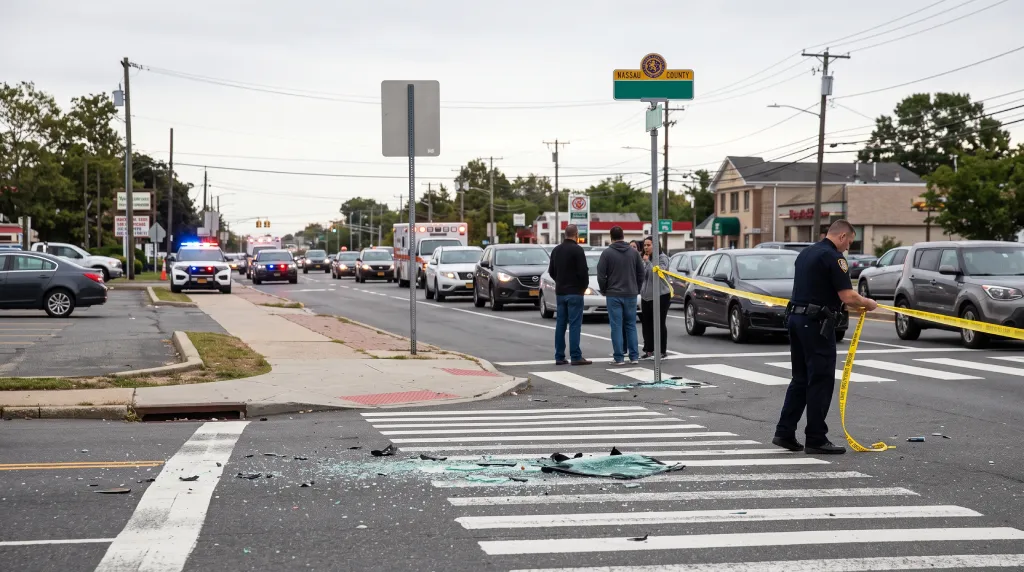
A Nassau County hit and run lawyer can start building your claim the day the other driver disappears. Even when no one caught the plate, New York gives hit-and-run victims real paths to payment, and Silver Law Group knows how to open each one. We handle crashes across Nassau: a driver who clips you on Hempstead Turnpike and speeds off, a car that strikes you in a parking lot and never stops, a pedestrian left in the road while taillights shrink into the distance. Your first consultation is free, and you can have it in English, Spanish, or Russian, at any hour. If you can’t travel to our Midtown office, an attorney comes to your home or your hospital room. You pay nothing to find out whether you have a case, and nothing at all unless we recover for you.
Do You Have a Hit and Run Case if the Driver Fled?
You do not need the driver’s name to get paid. New York built a system for this exact problem, because drivers flee every year and the law refused to leave their victims empty-handed.
Two coverages do the work when the car that hit you is a mystery. Uninsured motorist (UM) coverage sits inside almost every New York auto policy and treats a fleeing driver as if they carried no insurance, paying under your own policy. When you have no policy to turn to, the Motor Vehicle Accident Indemnification Corporation, known as MVAIC, steps in as the payer of last resort.
Both reach the people a hit and run usually leaves behind: the driver and passengers in the struck car, the pedestrian crossing at a corner, the cyclist riding the edge of a road like Hempstead Turnpike. The one firm requirement is proof that a real vehicle made contact with you. A phantom car that ran you off the road without touching anything is far harder to claim on, which is why the physical-contact rule below decides many of these cases before they start.
How You Get Paid When the Driver Is Unknown
Three separate pockets of money can cover a Nassau hit and run, and they generally pay in order.
No-fault Personal Injury Protection (PIP) pays first. It covers your medical bills and part of your lost wages up to $50,000, no matter who caused the crash, and it reaches the occupants of the insured vehicle and pedestrians struck by it. This is the money that keeps your treatment going in the weeks after the crash, while fault is still unsettled.
Uninsured motorist coverage comes next when the driver is never identified. Because a hit-and-run driver counts as uninsured, your UM coverage pays for the injury itself, including pain and suffering that no-fault does not touch. It protects you as a policyholder and often your household members and passengers as well.
MVAIC is the backstop. It exists for people with no auto policy of their own and no UM coverage to fall back on, so a pedestrian or cyclist with no car in the household still has a way to recover. MVAIC pays only when nothing else can, and it comes with its own strict filing rules.
Filing an MVAIC Claim
An MVAIC claim lives or dies on deadlines set by Insurance Law 5208, and they run faster than most people expect.
- Report the crash to police within 24 hours. A hit and run reported days later gives MVAIC grounds to deny the claim outright, so the police report is the first thing to protect.
- File a Notice of Intention to make a claim within 90 days of the accident. This is the formal step that tells MVAIC you are coming, and missing it usually ends the claim.
- Submit the no-fault application within 30 days to open your medical and wage benefits.
MVAIC also limits what it pays. Its coverage runs to $25,000 for one injured person and $50,000 total for a single accident, lower than what a driver’s own liability policy might have carried.
Two eligibility rules trip people up. You must be a qualified person: a New York resident with no insurance available to you from any other source. And the physical-contact rule requires that the hit-and-run vehicle actually struck you or your car. A near-miss that forced you into a guardrail, with no contact, generally does not qualify under MVAIC, though it may still fall under a UM claim. Sorting out which rule applies to your crash is exactly what the free case review is for.
What Your Nassau Hit and Run Claim Is Worth
Your recovery splits into two very different kinds of money.
The first is economic, and no-fault pays it regardless of fault: medical treatment, prescriptions, and a portion of the wages you lost while you couldn’t work, up to the $50,000 PIP limit. You reach these benefits without proving anyone did anything wrong.
The second is pain and suffering, and New York gates it behind a legal test. Insurance Law 5102(d) lets you sue for pain and suffering only if your harm clears the serious-injury threshold, which covers injuries like a fracture, a permanent limitation of a body part, or significant disfigurement. As of May 2026, the old 90/180-day category, which counted an injury that kept you from your usual activities for at least 90 of the first 180 days, has been removed from the statute. That change narrows the path for people whose injuries were painful but temporary, and it makes the medical documentation you build early in your case matter even more. Below the threshold, your recovery stays inside no-fault; above it, the full value of what the crash did to your life is on the table.
Steps That Protect Your Claim After a Nassau Hit and Run
What you do in the first hours often decides what you can collect months later.
- Call the police and get the crash reported inside 24 hours. That report is the anchor for both an MVAIC claim and a UM claim, and the clock on it is short.
- Photograph everything at the scene: your position, the damage, the road, and any piece of a plate number you managed to see. A partial plate has helped identify fleeing drivers who were later located.
- Get examined the same week, even if you feel able to walk away. Trauma care at Nassau University Medical Center in East Meadow or NYU Langone Hospital in Mineola creates the medical record your claim is built on, and injuries like internal bleeding or a concussion can hide behind adrenaline.
- Look for cameras before the footage is gone. Doorbell cameras, storefronts, and gas stations near the crash overwrite their recordings within days, so surveillance that could identify the driver has to be requested fast.
Save every receipt and appointment tied to the crash. Once treatment is underway, the paper trail you keep becomes the difference between an estimate and a documented loss.
How Fault Affects Recovery Under New York’s 2026 Rule
Fault used to matter less in New York than in most states, and that has changed for newer cases. Under CPLR 1411(b), for motor-vehicle suits filed on or after May 26, 2026, New York applies modified comparative fault: your recovery is barred entirely if your share of the fault is greater than the other driver’s.
That is a real shift. Being partly to blame no longer just trims your recovery; cross past the halfway line and it disappears. In a hit and run, the fleeing driver is usually the one at fault, but their absence can leave an adjuster free to pin more of the blame on you, since the other side of the story drove away. Building the record that keeps your share below the other driver’s is often the whole fight, and it is why the scene evidence and medical timing above carry so much weight.
Deadlines That Can End Your Nassau Case
Every hit-and-run claim runs against a hard stop, and letting one pass usually closes the courthouse door for good.
CPLR 214 gives you three years from the date of the crash to sue for your injuries. It feels like a long runway, but the investigation, treatment, and negotiation that come first eat into it quickly.
If someone died in the crash, EPTL 5-4.1 sets a shorter clock: two years from the date of death to bring a wrongful-death claim. That deadline runs on top of, not instead of, the notice rules below.
A government vehicle changes everything. If a NICE bus or a Nassau County vehicle was involved and fled, General Municipal Law 50-e requires a Notice of Claim within 90 days of the accident before you can sue the public entity at all. Ninety days is far shorter than the three-year window most people assume they have, and missing it can end a claim that would otherwise have been strong.
What Hiring a Nassau Hit and Run Lawyer Costs
Nothing up front. Silver Law Group works on a contingency fee, which means you pay no retainer and no hourly bill, and our fee is a percentage of what we recover for you. If we recover nothing, you owe us no attorney’s fee. The costs of building the case do not come out of your pocket while it is underway.
The free case review is where we tell you plainly which path fits your crash: an MVAIC claim, a UM claim on your own policy, or a claim against a driver who gets identified later. You leave that first conversation knowing what you have, at no cost and no obligation.
Why Nassau Victims Choose Silver Law Group
We prepare every case as if it is going to trial, and MVAIC and insurance carriers respond differently to a file built that way. An adjuster who knows the firm across the table is ready to try the case has less room to lowball a hit-and-run claim where the other driver is gone.
You can reach us any hour, in English, Spanish, or Russian, and if the injury keeps you home or in a hospital bed, an attorney comes to you. Nassau hit-and-run suits are venued at Nassau County Supreme Court in Mineola, and we handle them there directly rather than referring your case out.
If a driver hit you and drove off anywhere in Nassau County, call 212-470-4544 or request your free consultation today. The filing deadlines are already running.