

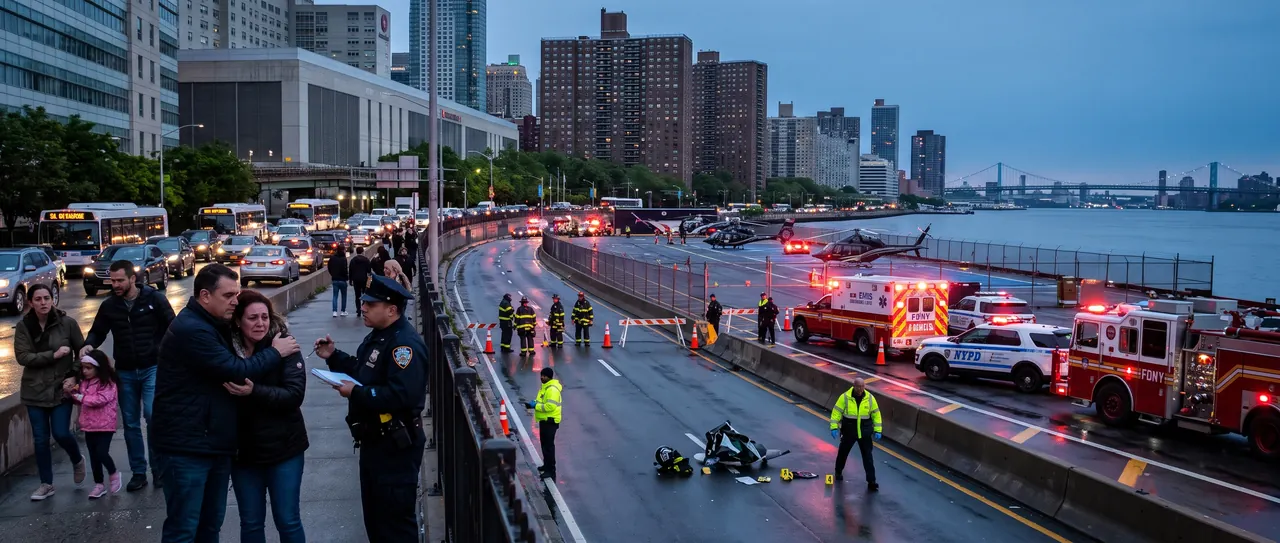
A helicopter falling into the Hudson and a jet sliding off a LaGuardia runway both start a federal investigation into what went wrong. A Manhattan Aviation Accident Lawyer runs a separate investigation into who pays for your injuries and what evidence it will take to prove it.
Silver Law Group represents passengers on airline, commuter, charter, and tour flights. We also represent crew members, families who lost someone, and people on the ground hit by an aircraft or its debris. Consultations are free, available 24/7, and offered in English, Spanish, and Russian. If you are in a hospital bed or a hotel room, the attorney comes to you.
The operator’s insurer has probably opened its file already. Call 212-470-4544 before you answer any of its questions.
Do You Have a Case After a Manhattan Plane or Helicopter Crash?
You may have a claim if a crash, a violent emergency landing, or severe turbulence hurt you or killed someone in your family. People who can bring a claim include:
- Passengers on scheduled airline, commuter, charter, and sightseeing flights
- Pilots and flight crew hurt by a defective part or another company’s mistake
- Spouses, children, and the estate of anyone killed
- People on a pier, the FDR Drive, or a rooftop who were struck by the aircraft or falling debris
Most claims come down to one or more of five failures. An aviation accident lawyer checks the records for every one of them, because a single crash often involves several.
- Pilot error, such as flying into worsening weather, mishandling an engine failure, or skipping a checklist item
- Maintenance lapses: an overdue inspection, a repair done to the wrong specification, or a known defect signed off as fixed
- Defective parts, from engines and rotor components to fuel controls and emergency flotation gear
- Bird strikes, where the question is whether the operator and airport managed a wildlife risk they knew about
- Operator certificate violations, meaning flights flown outside the limits the FAA set for that company
Tour and Charter Helicopter Crashes Over the Hudson and East River
Manhattan’s sightseeing and charter helicopters fly out of three waterfront heliports, and all of them send low-altitude traffic over the rivers:
- Downtown Manhattan Heliport, at Pier 6 near the southern tip of the island
- East 34th Street Heliport, on the East River
- West 30th Street Heliport, on the Hudson
On April 10, 2025, a Bell 206 tour helicopter that had taken off from lower Manhattan broke apart over the Hudson and fell into the river. The pilot and a family of five visiting from Spain were killed. In July 2026, the NTSB’s preliminary reports said goose remains were found on the rotors and tail. They also noted that a switch for the helicopter’s bird-deterrent pulse lights was missing from the control panel.
The final probable cause is still pending.
For a grieving family, that delay is the problem. The board has now spent more than 18 months on this crash, and New York’s filing deadlines keep running while it works. A bird strike also does not settle who is liable. It raises new questions about deterrent equipment, route choices, and whether the operator followed its own procedures.
Charter helicopters flying from the same heliports to regional airports raise those questions too, plus one more: whether the operator held the right FAA authority for the trip. A helicopter accident attorney will also read the waiver you signed at check-in. Its wording almost never covers the manufacturer or an outside maintenance shop.
Airline, Commuter, and Private Plane Accidents
Federal rules divide commercial flying into two tiers, and which tier your flight fell under decides which records matter. Scheduled airlines operate under Part 121 of the Federal Aviation Regulations, which carries heavier training, dispatch, and maintenance requirements. Commuter and on-demand charter operators, including many private jet services, operate under Part 135. A charter plane crash attorney checks whether the company actually held Part 135 authority for your flight, because a company selling seats without that certificate is flying illegally.
Most Manhattan travelers fly out of LaGuardia or JFK in Queens, or out of Teterboro across the Hudson for business and private jets. Injuries on these flights include:
- Turbulence injuries to unbelted passengers and flight attendants, including head trauma, spine damage, and burns from hot drinks
- Broken ankles, wrists, and backs from evacuation slides
- Runway excursions, where the aircraft leaves the runway on takeoff or landing and throws people into seats and bulkheads
- Private-plane crashes, which often cause severe burns and fatal injuries
In a small-aircraft case, a private plane accident lawyer starts with the pilot’s logbook and ratings and the aircraft’s last annual inspection.
Who Is Liable for an Aviation Accident in Manhattan?
Aviation cases rarely have just one defendant. Parties who can share fault include:
- The operator that ran the flight and employed or contracted the pilot
- The aircraft owner, which is often a different company from the operator
- Lessors, where the lease left them in control of the aircraft or its maintenance
- Pilots, for errors in judgment, training, or flying technique
- Maintenance and repair shops that inspected, overhauled, or signed off on the aircraft
- Manufacturers of the airframe, engines, and installed safety equipment, under product liability law
The March 11, 2018 East River crash shows how fault can spread. FlyNYON sold a doors-off photo flight, and Liberty Helicopters flew it. The helicopter lost engine power and rolled over in the river. The pilot got out, but the five passengers, held in place by harnesses, did not survive.
A jury later found Liberty Helicopters, FlyNYON, and Dart Aerospace, which made the helicopter’s emergency flotation system, liable.
That verdict named three defendants with three different roles: the company that sold the experience, the company that flew it, and the company that built a safety device. Suing only the operator would have left two of them out of the case.
Your case is handled the same way. Before naming anyone, an airplane crash attorney gathers the operator’s certificate and operating specifications, the aircraft’s maintenance records, and the purchase and repair history of each suspect part. Fault is then traced through every company that touched the flight. That includes the booking platform that sold you the ticket, if its marketing promised safety it could not deliver.
What Is a Manhattan Airplane Accident Claim Worth?
Nobody can honestly put a number on your claim during the first phone call. The value depends on which law governs the flight, how badly you were hurt, and how much the injury takes from the rest of your life.
International flights fall under the Montreal Convention. Article 21 sets two tiers of airline liability when a passenger is hurt or killed:
- Up to 151,880 Special Drawing Rights per passenger, the airline is strictly liable. It cannot cut your damages by proving it was careful. This limit has applied since December 28, 2024.
- Above that amount there is no cap. The airline avoids paying the excess only if it proves the damage was not caused by its negligence, or was caused solely by a third party.
A Special Drawing Right is a reserve unit set by the International Monetary Fund, and its value changes against national currencies every day. Domestic airline flights, charters, and Manhattan tour helicopters fall outside the treaty. For those, your damages are proved under New York negligence and product liability law, with no treaty tier involved.
An airplane accident attorney builds the damages case from records, not estimates. You can recover:
- Past and future medical costs, including emergency care, surgery, burn and wound treatment, rehabilitation, and home care
- Lost wages, plus lost future earning ability if you cannot go back to your job
- Pain, suffering, and the loss of activities you can no longer do
- In a death case, the financial support and household help the person would have provided, funeral costs, and the pain they felt before death
Every item on that list needs proof: bills, pay stubs, tax returns, and doctors who will explain your future care to a jury.
What Happens After an Aviation Accident
The National Transportation Safety Board leads the investigation of civil aviation accidents in the United States, with the FAA in support. The board decides what happened and why. It does not decide who owes you money.
Two rules shape your case from here. The companies that built and flew the aircraft often take part in the NTSB investigation as official parties, while anyone representing an injured claimant is kept out of that role. Federal law, at 49 U.S.C. 1154(b), also bars NTSB board accident reports from being used as evidence in a lawsuit for damages. The probable cause finding you read about in the news can never be shown to your jury.
So your attorney runs a separate investigation, with independent engineers and records requests, starting now rather than after the board finishes.
Many seriously injured survivors in Manhattan are treated at Bellevue Hospital, a Level I trauma center on First Avenue. Keep every discharge paper and follow-up referral. Then take these steps:
- Keep your boarding pass, e-ticket receipt, and booking confirmation. They prove you were on board and show which company sold the trip.
- Save the tour waiver, the safety card if you have it, and any check-in emails or texts.
- Back up every photo and video on your phone, including shots taken before the crash.
- Photograph your injuries every few days as they change.
- Write down the names of crew, other passengers, and ground witnesses while you still remember them.
- Turn down recorded statements to the airline’s or operator’s insurer until you have a lawyer.
Where Your Aviation Case Is Filed
Your case can be filed in state court or federal court, and the choice affects the judge, the jury pool, and the procedural rules. New York County Supreme Court, at 60 Centre Street in lower Manhattan, hears state-law negligence and product liability claims. The federal Southern District of New York sits a short walk away at 500 Pearl Street. It takes cases that arise under federal law, including Montreal Convention claims, and many suits between parties from different states or countries.
Defendants often try to move state cases into federal court, so an airline accident attorney plans for both courts before filing.
For international passengers, Article 33(2) of the Montreal Convention adds a fifth place to sue. If your principal and permanent residence is in the United States, you can sue in a U.S. court, as long as the airline runs passenger service to or from this country and does business here. That means a Manhattan resident hurt on a flight between two foreign cities may still be able to bring the case home.
What It Costs to Hire Our Plane Crash Attorneys
Silver Law Group takes aviation cases on a contingency fee. You pay no attorney fee unless we recover compensation for you. If we do, the fee is an agreed percentage of that recovery, and if there is no recovery, you owe no fee. Aviation cases do carry real costs, such as engineers, wreckage inspection, and expert reports. Your written fee agreement explains how those case expenses are handled and when they are repaid. Before you hire any airplane injury law firm, read that agreement and ask about any line you do not understand.
Deadlines for Filing a New York Aviation Accident Claim
Several clocks start on the day of the crash, and the shortest one that applies to you is the one that matters.
- CPLR 214 gives you three years to sue for personal injury.
- A wrongful death action under EPTL 5-4.1 must be filed within two years of the death.
- On international flights, Montreal Convention Article 35 cuts off the right to damages two years after the aircraft arrived, or should have arrived. Missing this deadline ends the claim entirely.
- If the City of New York or a city agency is a defendant, General Municipal Law 50-e requires a Notice of Claim within 90 days.
- The lawsuit against that city defendant must follow within one year and 90 days under GML 50-i.
- The federal General Aviation Revitalization Act (GARA) sets an 18-year statute of repose. It bars most suits against manufacturers of general aviation aircraft and parts filed more than 18 years after delivery, though a replacement part starts its own 18-year clock.
The 90-day notice is the deadline families miss most easily, because nobody is thinking about city liability in the first weeks. An airplane accident lawyer puts it on the calendar first. GARA works differently. It can end a product claim against an older plane’s manufacturer before the case starts, which makes the aircraft’s part-replacement history an urgent document to get.
Why Manhattan Crash Victims Choose Silver Law Group
An operator’s adjuster may call before you leave the hospital. This is what you get from us in return:
- Consultations in English, Spanish, and Russian, for Manhattan residents and for families visiting from abroad
- An attorney who comes to your hospital room, hotel, or home, so you do not have to travel while injured
- Phones answered 24/7, including the first night after a crash
- Every case prepared for trial from the start. Airline and operator insurers value a claim partly by how ready the other side is to pick a jury.
- No attorney fee unless we recover
Visiting families face their own pressure. Many have to fly home within days, and once they leave, the evidence and the witnesses stay in New York. We meet you before your flight, collect what you have, and keep working on the case after you leave.
Speak With a Manhattan Aviation Accident Lawyer Today
Silver Law Group’s office is at 49 West 37th Street, 7th Floor, New York, NY 10018, in Midtown Manhattan. You do not need an out-of-state air disaster attorney to bring a case over a Manhattan crash. You need someone who knows the courts at 60 Centre Street and 500 Pearl Street and starts on your evidence this week. Call 212-470-4544 at any hour, or send the contact form on this page.