

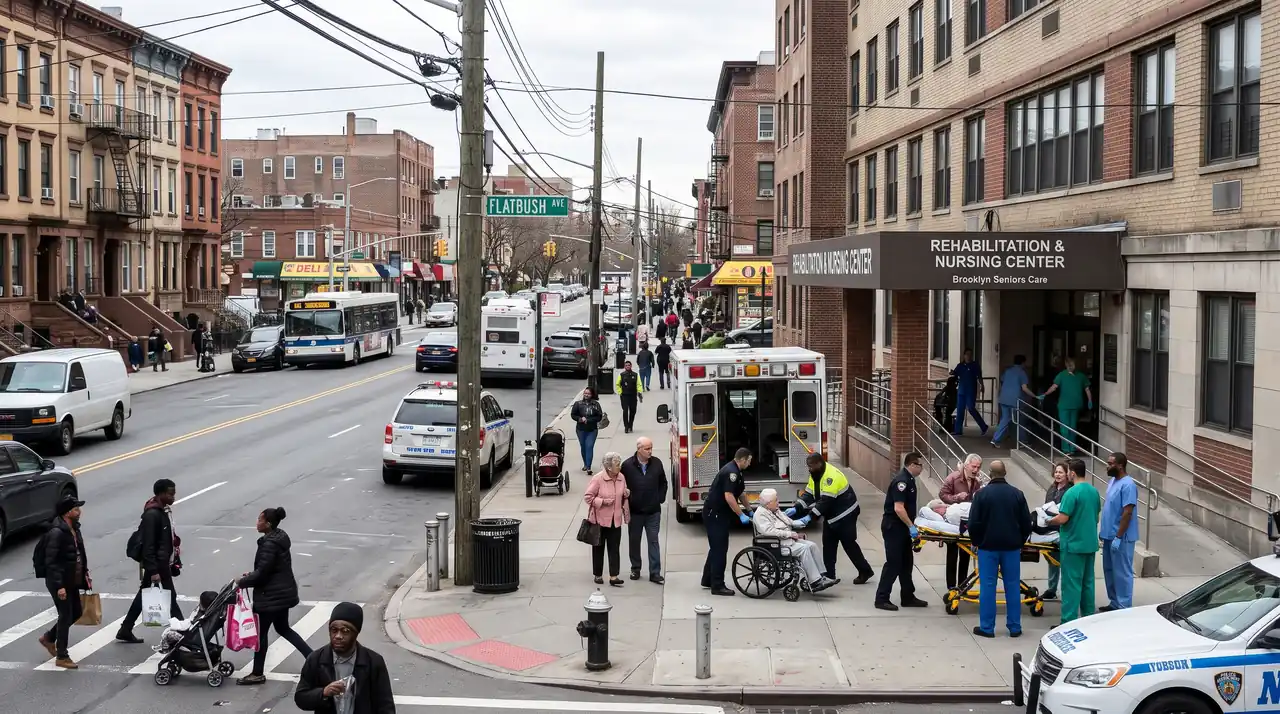
A Brooklyn nursing home negligence attorney at Silver Law Group represents Kings County nursing home residents who were hurt by care that never came, along with the families who found the injury first. A bedsore that reached the bone, a hip broken in a fall nobody saw, a hospital admission for dehydration: each one leaves a trail in the facility’s chart, and that chart is where your case begins. The nursing home’s insurer starts preparing its defense as soon as the injury is written down. Your family should have someone reading the same records just as quickly.
Every case starts with a free consultation, and you pay no attorney fee unless we recover compensation for you. Call 212-470-4544 at any hour. An attorney can meet you at your parent’s bedside or at the hospital, and consultations are available in English, Spanish, and Russian.
Signs of Nursing Home Neglect in Brooklyn
Families usually notice neglect on a visit, long before anyone at the facility admits a problem. Neglect means the home failed to give care the resident needed and the care plan called for, such as turning in bed, meals, help to the bathroom, or an answer to a call. The evidence tends to show up on the resident’s body or in the room first.
- Weight loss over a few weeks, or clothes that suddenly hang loose
- Bruises or skin tears that staff cannot explain, or explain differently each time you ask
- Wet or soiled bedding at visiting hours
- A parent who stops talking, stops eating with others, or seems afraid of one particular aide
- Call bells left ringing, or a call cord clipped somewhere your parent cannot reach
One of these signs alone may have an innocent cause. Two or three together form a pattern, and a pattern is worth writing down with dates.
Bedsores, Falls, Dehydration, and Infections
Each of these injuries has a known prevention protocol, which is why a facility that lets one happen has a hard time explaining it away.
Pressure ulcers, or bedsores, form when a resident stays in one position too long and blood stops reaching the skin over the hip, heel, or tailbone. Clinicians grade them in four stages. Stage 1 is red skin that stays red when pressed, and Stage 2 is an open, shallow wound.
Stage 3 goes through the skin into the fat beneath it. Stage 4 exposes muscle, tendon, or bone. A wound that moves from Stage 1 to Stage 4 inside a nursing home means weeks of missed turning and skipped skin checks.
The other preventable harms follow the same logic of a known risk left unmanaged:
- An unwitnessed fall, with the resident found on the floor at shift change, is a common path to a hip fracture. It often follows a fall-risk assessment that called for a bed alarm, a low bed, or a two-person assist that never happened.
- Malnutrition and dehydration set in when a resident who cannot feed themselves gets a tray left out of reach and no one tracks how much they drink.
- An untreated urinary tract infection can spread into the blood and become sepsis. In older residents the early sign is often new confusion or agitation, not pain, so staff who know the resident should catch it.
- Medication errors: wrong dose, missed dose, or another resident’s pills.
- Residents with dementia who wander need supervision and secured exits. A resident found outside, or hurt in a stairwell, was not being watched.
Preventable is the word that matters legally. If the facility identified the risk in its own assessment and still did not act, the injury itself becomes evidence of negligence.
Elder Abuse and Financial Exploitation
New York does not leave abuse reporting to the facility’s judgment. Public Health Law 2803-d requires nursing home staff who suspect abuse, neglect, or theft of a resident’s property to report it to the state Department of Health immediately by phone, then in writing within 48 hours. A home that kept an incident in-house broke that law before any lawsuit was filed. The gap between the incident date and the DOH report date is one of the first things we check.
Financial exploitation is quieter. Watch for missing jewelry, a debit card used at stores your father could not have visited, new names on bank accounts, or cash withdrawals while he was confined to bed. Because property theft falls under the same 2803-d reporting duty, ask the administrator in writing whether a report was made, and keep a copy of your letter.
If you need an elder abuse lawyer in New York because a staff member hurt your parent or stole from them, start by saving what you already have: bank statements, photos, the names of staff on duty, and the dates of your visits.
When a Brooklyn Nursing Home Is Legally Responsible
Three state statutes do most of the work in a Brooklyn nursing home case, and each one gives your claim a different footing.
- Public Health Law 2803-c sets out a bill of rights held by every nursing home resident in New York.
- Public Health Law 2801-d lets a resident sue a nursing home that deprives them of a right or benefit created by state or federal law, regulation, or contract, including the 2803-c rights. You do not have to fit the injury into a malpractice framework to use it.
- Public Health Law 2895-b sets a staffing floor of 3.5 hours of direct care per resident per day.
That staffing number often explains the injury. When payroll and scheduling records show the facility ran below 3.5 hours per resident on the night your mother fell, the fall stops looking like bad luck and starts looking like a business decision.
The difference between negligence and malpractice decides which deadline applies and what you have to prove. Ordinary negligence covers custodial failures anyone can recognize without medical training, like a resident left unturned, a call bell ignored, or a meal tray placed out of reach. Medical malpractice involves a clinical judgment, such as a physician’s medication choice or a nurse’s failure to escalate signs of infection, and it generally requires expert testimony that the decision fell below accepted practice. Many Brooklyn cases contain both, and a nursing home negligence attorney in New York will plead each claim separately so a defense aimed at one does not knock out the other.
Who Can File: Residents, Families, and Estates
The claim belongs to the injured resident. A resident who can still make decisions can bring the case in their own name, with family members helping behind the scenes. When the resident cannot manage a lawsuit, a court-appointed guardian or an agent acting under a power of attorney can bring it on their behalf. Being next of kin is not enough on its own, and many adult children learn this only after a facility’s lawyer raises it.
If your parent has died, the claim passes to the estate, and someone has to be formally appointed to act for it. In Brooklyn that means petitioning the Kings County Surrogate’s Court at 2 Johnson Street for letters of administration. Until those letters issue, no one has authority to file the lawsuit, and the wrongful death deadline keeps running in the meantime. We can review the documents your family already has and help prepare the Surrogate’s Court petition while the estate is being opened.
What a Nursing Home Neglect Claim Is Worth
Public Health Law 2801-d sets a floor that most injury claims in New York do not have. For each day an injury caused by the deprivation of a resident’s rights exists, compensatory damages can be no less than 25% of the facility’s daily per-patient rate. A bedsore that stays open for four months raises that floor for every day it stays open.
Above that minimum, a living resident’s claim can include:
- Medical costs tied to the injury, including hospital stays and wound care
- Pain and suffering from the injury itself
- Punitive damages under 2801-d, available when the facility’s deprivation of rights was willful or in reckless disregard of the resident’s rights
Punitive damages change how a facility’s insurer reads the file. They punish the home for the conduct, not only for the harm, and evidence of known short-staffing or ignored warnings is what supports them.
Wrongful death works differently. If neglect caused a resident’s death, New York limits the family’s recovery to economic loss, such as funeral costs and the financial support the person provided. Grief and lost companionship are not compensable. The Grieving Families Act would have changed that rule, but it was vetoed in December 2025, so economic-only damages still govern Brooklyn wrongful death cases.
What to Do If You Suspect Neglect
The order matters, because the first steps protect your parent and the later ones protect the evidence.
- Call 911 if your parent is in immediate danger, unresponsive, or has an injury that needs a hospital now. Do not wait for the facility to make that call.
- File a complaint with the New York State Department of Health at 1-888-201-4563. It puts the state on notice and creates a dated record that you raised the problem.
- Photograph every injury on every visit, and photograph the room too: the bedding, the water pitcher, where the call bell sits.
- Request a copy of your parent’s chart in writing, and keep a copy of the request.
- Get the hospital records. If your parent went to Maimonides Medical Center or another transfer hospital, the admitting notes often describe the wound or the dehydration in plainer terms than the nursing home’s chart did.
- Look up the facility on the NYS Nursing Home Profiles site and on Medicare’s Care Compare. Past inspection citations for the same kind of failure help show the home knew about the problem.
After an incident, do not sign anything the facility hands you. Do not give a recorded statement to its insurer before you talk to a lawyer.
Arbitration Clauses in Admission Agreements
Admission packets often include an arbitration agreement tucked among the Medicaid and consent forms. Signing it moves your claim away from a jury and into a private proceeding. Federal rule 42 CFR 483.70(m) bars a facility from requiring a resident to sign a binding arbitration agreement as a condition of admission or of continued care.
The same rule gives the resident 30 calendar days after signing to rescind. If your parent signed one within the last month, cancel it in writing now and keep proof of delivery. If the window has closed, send us the packet anyway, because how the agreement was presented and who signed it both bear on whether it holds.
What Our Nursing Home Negligence Attorneys Cost
Nothing upfront, and nothing out of pocket while the case is open. Silver Law Group works on a contingency fee, which means the attorney fee is a percentage of the compensation we recover and is taken from that recovery when the case ends. If there is no recovery, you owe no attorney fee. The percentage is written into the agreement you read before you sign, so you know the number before any work begins. Because our fee depends on the outcome, we carry the cost of building the case, from records requests to nursing expert review, until it resolves.
Deadlines for Brooklyn Nursing Home Claims
Several limitation periods can apply to a single Brooklyn nursing home case, and the shortest one that applies controls your filing date.
- Three years under CPLR 214 for ordinary negligence and for resident-rights claims under Public Health Law 2801-d, counted from the injury.
- Two and a half years under CPLR 214-a for medical malpractice. A claim built on a doctor’s or nurse’s clinical decision needs attention sooner for that reason.
- Two years from the date of death under EPTL 5-4.1 for a wrongful death action brought by the estate.
- If the resident dies before their own deadline expires, CPLR 210(a) gives the estate’s representative one year after the death to file the resident’s injury claim.
- CPLR 208 pauses the clock for a person whose mental condition leaves them unable to protect their legal rights.
Families lose claims by mixing these up. A fracture from a fall in one year, followed by a death eighteen months later, can carry three separate deadlines, each starting on a different date.
The CPLR 208 toll needs a warning of its own. Courts apply it narrowly, and a dementia diagnosis alone does not guarantee it will apply. Plan around the standard deadline and treat the toll as a backstop, never as the plan.
Claims Against the City-Run McKinney Center
NYC Health + Hospitals/McKinney, at 594 Albany Avenue in East Flatbush, is run by the city’s public hospital system, and that shortens everything. Under Unconsolidated Laws 7401(2), you must serve a notice of claim within 90 days of the injury. The lawsuit itself must be filed within one year and 90 days.
Ninety days goes fast when your parent is recovering from a fracture and you are traveling between the hospital and work. If the injury happened at McKinney, call in the first few weeks so the notice can be drafted, supported with records, and served well before day 90.
Why Brooklyn Families Choose Silver Law Group
Brooklyn nursing home lawsuits are filed in Kings County Supreme Court at 360 Adams Street, and we prepare every case as though a jury in that courthouse will decide it. A facility’s insurer judges a file by how it would hold up at trial, so we build the file for trial from the first week.
Here is what that looks like in practice:
- A nursing expert reviews the chart line by line, matching turning logs, intake sheets, and medication records against what the care plan ordered. Gaps in charting are often where a case turns.
- Depositions of the aides and supervisors on duty, plus the staffing records that show whether the 3.5-hour floor was met.
- Bedside visits. An attorney comes to the nursing home, the hospital, or your apartment so your parent can be heard without making the trip to Manhattan.
- Russian-language consultations for families in Brighton Beach and Sheepshead Bay, and Spanish for families in Sunset Park.
That last point matters more than it sounds. The person who noticed the bruises is often a spouse or a home aide who explains details best in their first language, and the details are what the case is built on.
The phone is answered 24/7, including the night of a 911 call.
Talk to a Brooklyn Nursing Home Negligence Attorney Today
Call 212-470-4544, day or night, and tell us what you saw. The consultation is free, and an attorney can come to your parent’s bedside in Brooklyn if getting to our office is not practical.
Silver Law Group is at 49 West 37th Street, 7th Floor, New York, NY 10018, in Midtown Manhattan. If you have the admission agreement, photos of the injury, or hospital discharge papers, have them nearby when you call. If you have nothing yet, call anyway and we will start the records requests. If your parent was hurt at McKinney, the 90-day notice deadline makes this call more urgent.